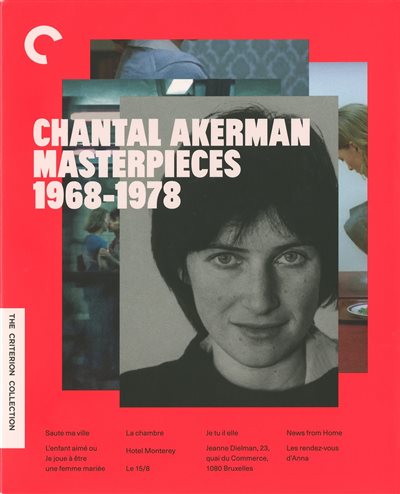
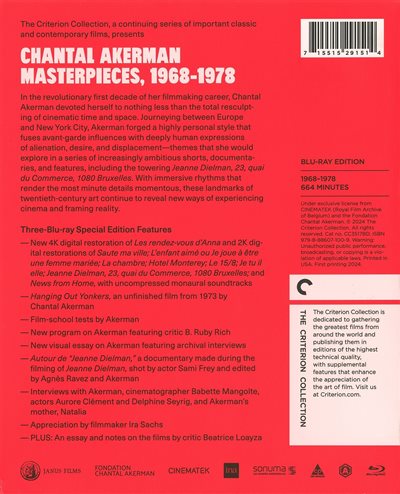
Hotel Monterey (1973)
Documentary · 1h 2m · 1/23/2024


Description
Chantal Akerman considered Hotel Monterey her first real triumph as a filmmaker. Shot over the course of one night in a Manhattan budget hotel where she had stayed for a time, the silent experimental documentary employs duration to magnify and give texture to the feeling of solitude. By this time, however, Akerman's worldview had expanded beyond the domestic claustrophobia that informed her previous work. Now, she was a foreigner in a new land characterized by intense economic precarity and social atomization. While Akerman was embraced by New York City's robust artistic communities, her financial insecurity and chaotic living situations sharpened her awareness of a collective urban malaise. Hotel Monterey explores the titular dingy establishment from dusk till dawn, beginning in the foyer and ending on the rooftop, with a pearly view of the city skyline. In between, Akerman's camera lingers in the hotel's rooms, hallways, and elevators, employing static shots and slow pans to conjure a charged ambience from seemingly sterile tableaux. Hotel patrons occasionally enter and exit the frame like drifting spirits. Even when the camera settles on stationary individuals—one woman sits with her back to us; a grinning older man in a tuxedo stares straight at the camera—Akerman's formalist compositions accentuate the dead space around them. These arrangements are made all the more uncanny by the hotel's garish furniture and jaundiced colors, which evoke the seductive melancholy of Edward Hopper's cityscapes. Akerman's approach invites us to engage more attentively with the complexity of the images before us, as one would with a painting or a photograph. A barren hallway, for instance, reveals its depths as we notice the exit sign in the back and the way the light bounces off a yellow wall, creating a shadow in one corner. The protraction of cinematic time, employed deliberately with each lengthy shot, reminds us that we are engaged in the act of observation. Babette Mangolte's camera gazes impassively, attuning us to the presence of its operator, yet as the machine continues to roll, one wonders if this other witness has abandoned their post, leaving Akerman suspended in solitude. This technique raises the possibility that we, too, might be alone.
Release Country
United StatesRelease Date
1/23/2024Media Type
DocumentaryDigital Copy
Not IncludedStudio
Chant/Cinematek/Fondation Chantal Akerman/Janus Films/The Criterion CollectionVideo Format
1080pAspect Ratio
1.37:1Cover Type
Digipack , Slip CoverDiscs


Chantal Akerman Masterpieces, 1968-1978

Chantal Akerman
DirectorChantal Akerman
Writer
Wavelength

Jeanne Dielman, 23 Quai du Commerce, 1080 Bruxelles
La Jetée
A Man Escaped
Sans Soleil
Titicut Follies
Man with a Movie Camera
Manakamana

El Mar La Mar

The Gleaners & I
Los Angeles Plays Itself
Office
Robinson Crusoe
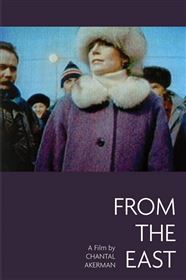
From the East
In Vanda's Room
Colossal Youth

Horse Money
Vitalina Varela

Deep End

Pastoral: To Die in the Country
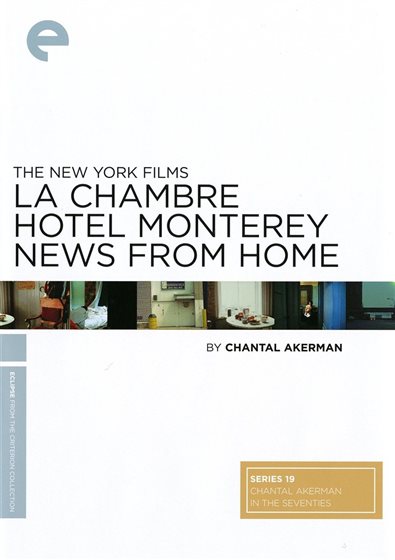
Hôtel Monterey
(DVD)
1/19/2010
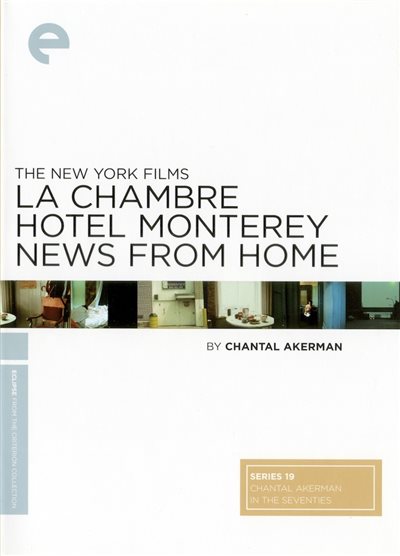
The New York Films: Hotel Monterey
(DVD)
1/19/2010