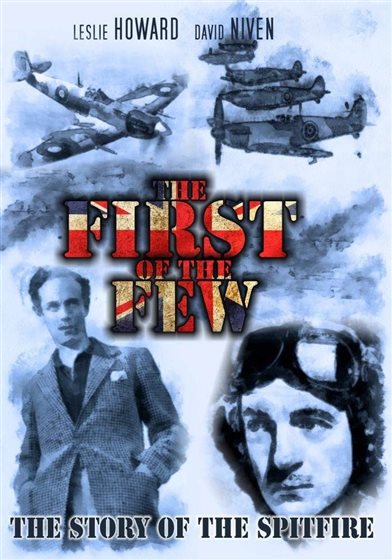
The First of the Few (1942)
Drama/Adventure · 1h 58m


Description
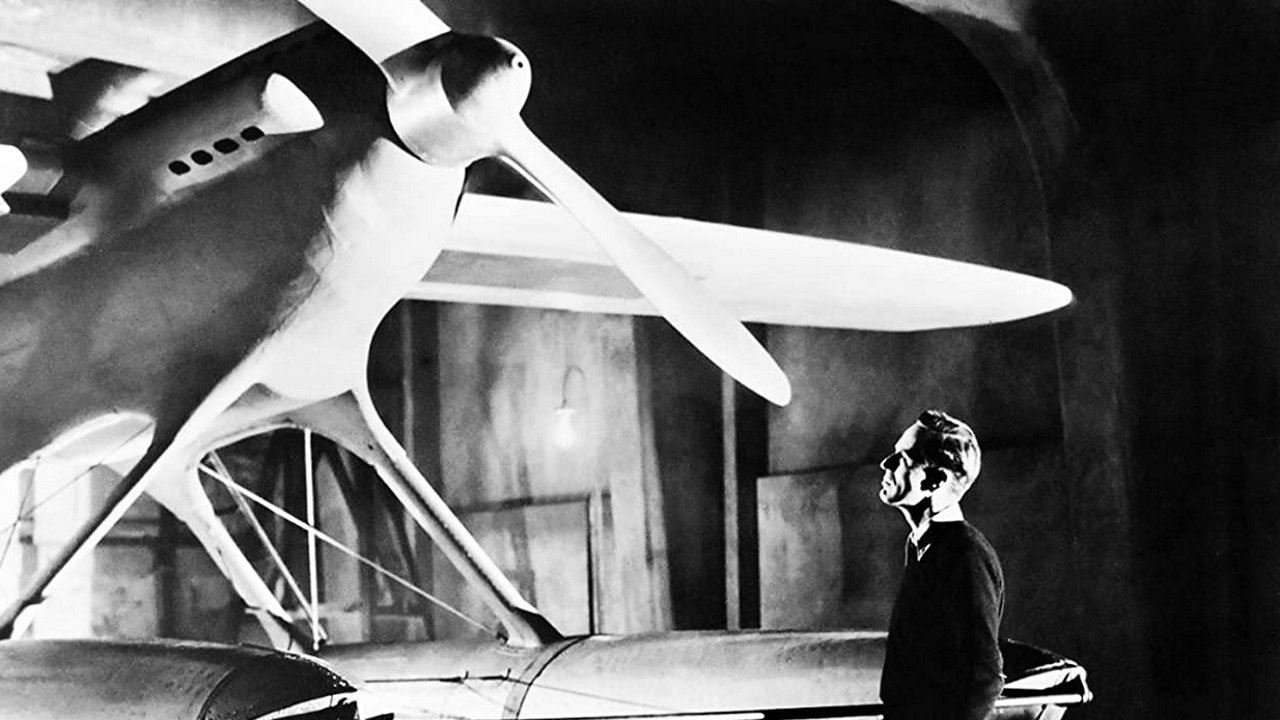
The First of the Few, known as Spitfire in the United States, is a 1942 British film directed by and starring Leslie Howard as R.J. Mitchell, the designer of the Supermarine Spitfire, alongside co-star David Niven. The film depicts Mitchell's strong work ethic in designing the Spitfire and his death. The film's title alludes to Winston Churchill's speech describing Battle of Britain aircrew, subsequently known as "The Few": "Never in the field of human conflict was so much owed by so many to so few". This classic 1942 war movie tells the true story of how Spitfire designer R.J. Mitchell and his test pilot Jeffrey Quill developed the aeroplane whose technological superiority helped Britian to win The Battle of Britain, the geatest aerial conflict in Britain's history which helped to turn the tide of World War II. It features two of Britain's best loved stars: Leslie Howard (who tragically went missing in action after the film was made) as Mitchell and David Niven as Quill. Plot A newsreel sets the scene for summer 1940, showing Nazi advances in Europe with Britain facing invasion and aerial attacks on the island increasing. On 15 September 1940, during the Battle of Britain, RAF Squadron Leader Geoffrey Crisp (David Niven), the station commander of a Spitfire squadron, recounts the story of how his friend, R.J. Mitchell (Leslie Howard) designed the Spitfire fighter. His pilots listen as Crisp begins with the 1922 Schneider Trophy competition, where Mitchell began his most important work, designing high speed aircraft. While watching seagulls with his binoculars, he envisages a new shape for aircraft in the future. Crisp, an ex-First World War pilot seeking work, captivates Mitchell with his enthusiasm and the designer promises to hire him as test pilot should his design ever go into production. Facing opposition from official sources, Mitchell succeeds in creating a series of highly successful seaplane racers, eventually winning the Schneider Trophy outright for Great Britain. After a visit to Germany in the 1930s and a chance meeting with leading German aircraft designer Willy Messerschmitt, Mitchell resolves to build the fastest and deadliest fighter aircraft. Convincing Henry Royce of Rolls-Royce that a new engine, eventually to become the famous Rolls-Royce Merlin, is needed, Mitchell gets the powerplant he requires. Faced by the devastating news that he has only one year to live and battling against failing health, Mitchell dies as the first prototype Supermarine Spitfire takes to the skies. (In fact, Mitchell died over 15 months after the first flight). Crisp ends his account when the squadron is scrambled to counter a German attack: the fight sees the Germans beaten, with the Luftwaffe losing more planes than the British. In the end, Crisp is happy over the victory and looks to the heavens to Mitchell, voicing a thanks to Mitchell for creating the Spitfire. Aviation engineer and designer R.J. Mitchell was the subject of the "bio-pic". The First of the Few used footage of the Supermarine Spitfire prototype as well as scenes of early series production types. The First of the Few was a British film produced and directed by Leslie Howard, with Howard taking the starring role of R.J. Mitchell. Leslie Howard bore little resemblance to R. J. Mitchell, however, as Mitchell was a large and athletic man. Howard portrayed Mitchell as upper class and mild-mannered. Mitchell – "the Guv'nor" – was in fact working class and had an explosive temper; apprentices were told to watch the colour of his neck and to run if it turned red. Howard himself was well aware of these deliberate artistic discrepancies, and dealt delicately with the family and Mitchell’s colleagues; Mrs. Mitchell and her son Gordon were on the set during much of the production.[2] Because The First of the Few was made during the Second World War and dealt with subjects related to the conflict, it was, in effect, propaganda. Because of its value as propaganda, the RAF contributed Spitfire fighters for the production. U.S. producer Samuel Goldwyn released Niven who was still under contract to Metro-Goldwyn-Mayer, allowing him to appear in exchange for U.S. distribution rights. After seeing the prints, Goldwyn was furious that Niven was cast in a secondary role and personally edited out 40 minutes before reissuing the film as Spitfire.[3] Musical score The film's score was composed by William Walton, who later incorporated major cues into a concert work known as "Spitfire Prelude and Fugue". Historical accuracy This section needs additional citations for verification. Please help improve this article by adding citations to reliable sources. Unsourced material may be challenged and removed. (January 2013) The First of the Few contains several historical inaccuracies: Mitchell's exact illness is not mentioned. He had rectal cancer and had a colostomy in 1933. However the film gave many people the impression that he contracted tuberculosis as a consequence of an immune system weakened by overwork. Mitchell did not work himself to death on the Spitfire. He did, however, continue to work despite the pain of his illness, tweaking and perfecting the Spitfire design up until his death. Designer Joseph Smith had taken over the primary design work by the time of the first flight of the Spitfire prototype. The famous "Merlin" engine was named after a bird of prey, following the Rolls-Royce convention adopted for its piston aircraft engine designs; certainly not after the incubus wizard of Arthurian legend, as depicted in the film. Mitchell did not visit Germany and so never met Willy Messerschmitt. The film shows that the trip convinced him to design the Spitfire. Geoffrey Crisp is a fictional character based on an amalgam of Vickers's test pilots, Jeffrey Quill (also an RAF veteran) and "Mutt" Summers. Quill actually flies a Spitfire in the film, and had tested the Spitfire in battle, shooting down three aircraft while on temporary assignment to the RAF.[4] Screencapture from The First of the Few shows the Supermarine S.6 racer. The film contains historically significant footage that would otherwise have been lost to posterity: Film footage of the Supermarine S.4 in taking off from Southampton Water, and in flight, which is now available nowhere else. The film also includes footage of many real-life Battle of Britain fighter pilots in the opening and closing scenes. RAF fighter pilots such as Tony Bartley and Brian Kingcombe (with pipe) have cameo roles in the scenes at the dispersal, and are seen discussing their flights before take off and after landing with David Niven.[5] Film footage of Jeffrey Quill flying a Spitfire Mk II in the final scenes of the film. Jeffrey Quill's log book records that the aerobatic flying sequences featured in the last 20 minutes of the film were made by him from Northolt on 1–2 November 1941, in a Spitfire Mk II, flying for one hour, five minutes on 1 November and for 45 minutes on 2 November 1941. Leslie Howard's portrayal of Mitchell has a special significance since Howard was killed when the BOAC Flight 777 airliner in which he was a passenger was shot down by the Luftwaffe one year after the film was released.[6] Reception In an atmosphere of wartime frenzy, The First of the Few was received well by audiences and critics on both sides of the Atlantic. Later reviews noted that the film "gets the essentials correct, and is surprisingly suspenseful for a bio-pic of this type. As a result of the presence of David Niven in the cast, The First of the Few was picked up for distribution in the U.S. by Samuel Goldwyn, who had Niven under contract".[7] More recently, Leonard Maltin called it a "good biographical drama".[8]

Release Country
United StatesBarcode
889290178800Media Type
MovieVideo Format
NTSCDiscs

Streaming Rank Today

Leslie Howard
R.J. Mitchell
David Niven
Geoffrey Crisp
Rosamund John
Diana Mitchell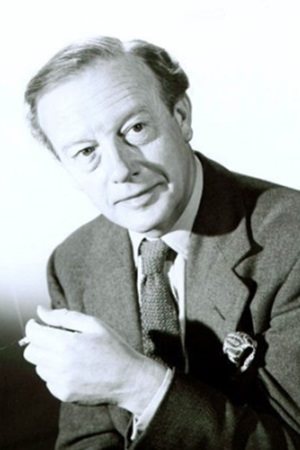
Roland Culver
Commander BrideBrad Dawe
Miss HarperDavid Horne
Mr. HigginsJ.H. Roberts
Sir Robert McLean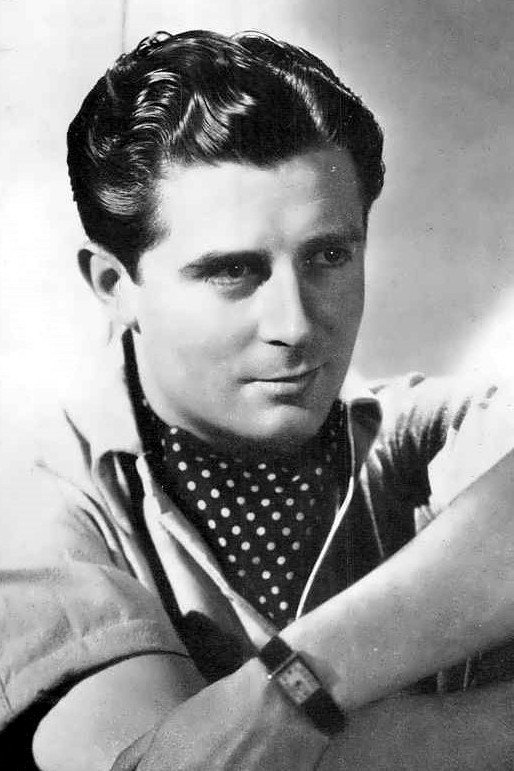
Derrick De Marney
Squadron Leader JeffersonRosalyn Boulter
Mabel LovesayHerbert Cameron
MacPhersonToni Edgar-Bruce
Lady Houston (as Toni Edgar Bruce)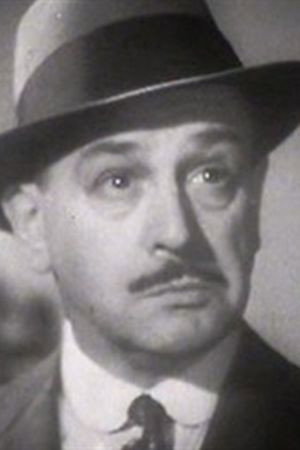
Gordon McLeod
Major BuchanGeorge Skillan
Mr. RoyceErik Freund
MesserschmittFritz Wendhausen
Von Straben (as F.R. Wendhausen)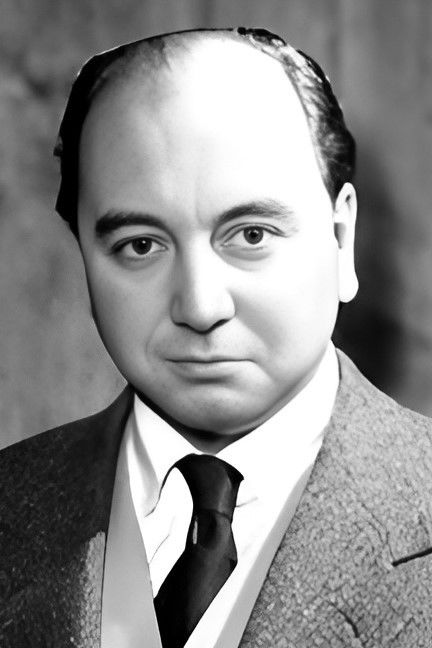
John Chandos
Krantz
Victor Beaumont
Von CrantzSuzanne Clair
MadeleineFilippo Del Giudice
BertorelliBrefni O'Rorke
The SpecialistGerry Wilmot
Radio AnnouncerJack Peach
Radio Announcer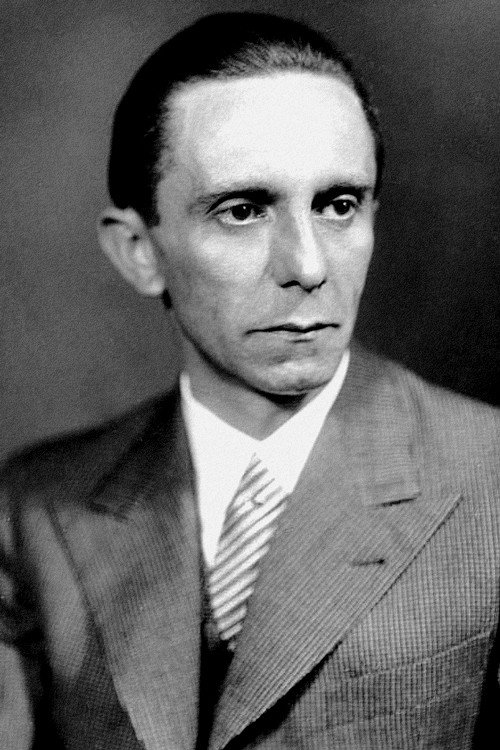
Joseph Goebbels
Himself (archive footage) (as Josef Goebbels)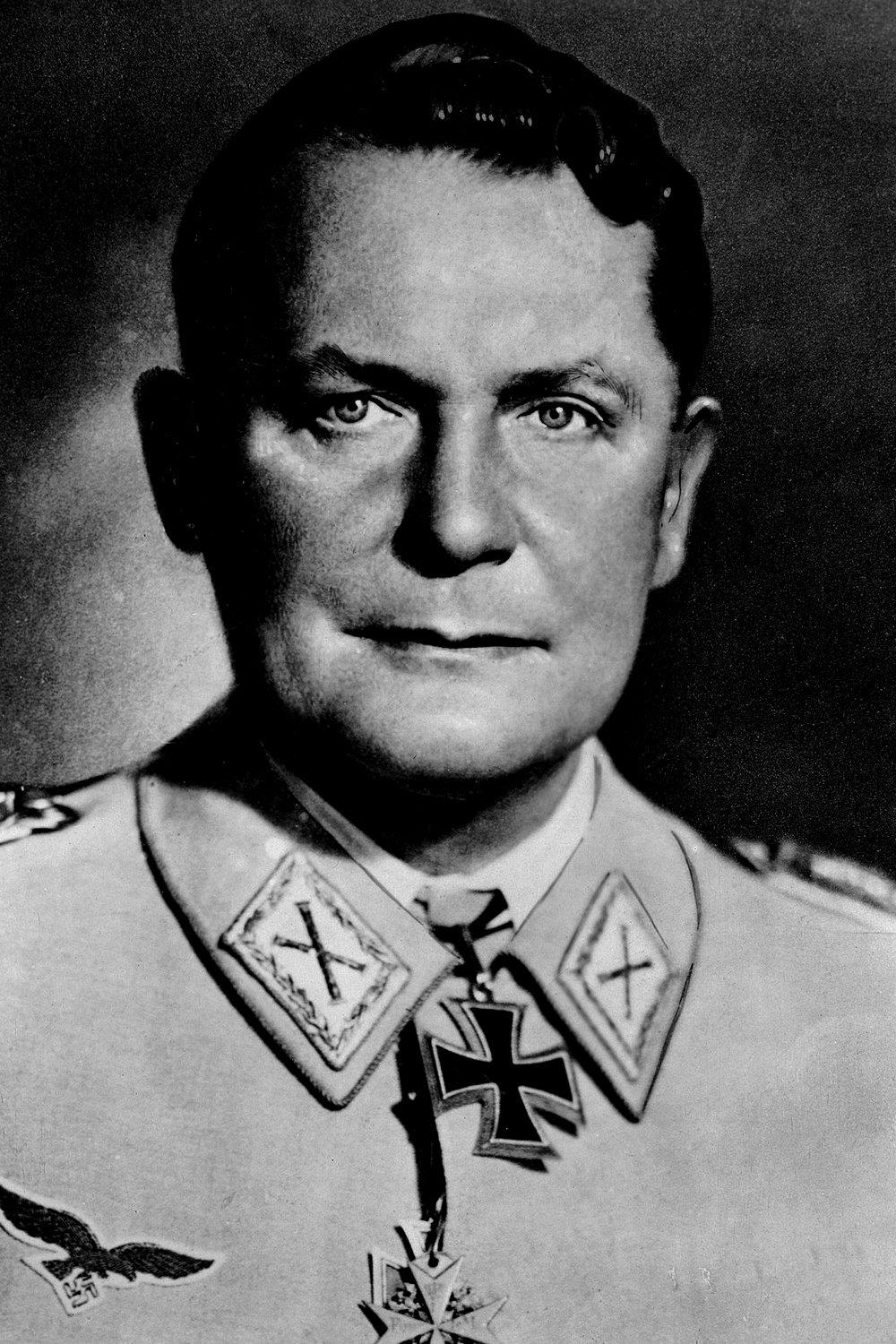
Hermann Göring
Himself (archive footage)Adolf Hitler
Himself (archive footage)
Robert Beatty
American Airman (uncredited)Albert Chevalier
Civilian in Control Room (uncredited)
Winston Churchill
Himself (uncredited)Bunny Currant
Himself (uncredited)
Peter Gawthorne
Board Member (uncredited)Leslie Ruth Howard
Nurse (uncredited)
Miles Malleson
Vickers Representative (uncredited)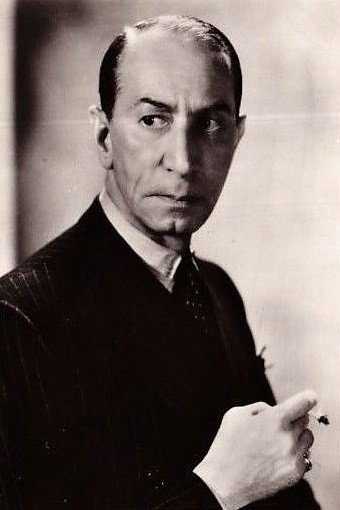
Gibb McLaughlin
Sir Ian MacLaren (uncredited)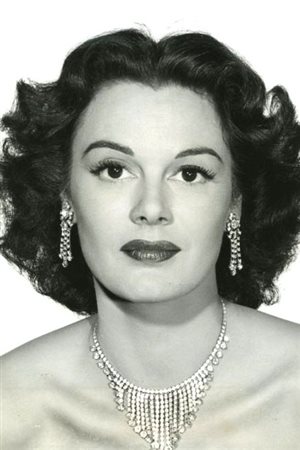
Patricia Medina
Venetian Girl (uncredited)
Bernard Miles
Lady Houston's Agent (uncredited)Olaf Olsen
Civilian at Richtofen Club (uncredited)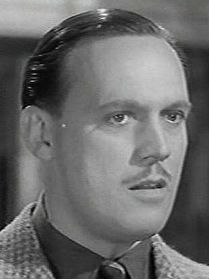
Cyril Raymond
Radio Control Officer (uncredited)Leslie Howard
DirectorHenry C. James
WriterKatherine Strueby
WriterMiles Malleson
WriterAnatole de Grunwald
Writer
Wings
Hell's Angels
The Dawn Patrol
Flying Down to Rio
Test Pilot

Only Angels Have Wings

A Yank in the R.A.F.
Mrs. Miniver

Wake Island
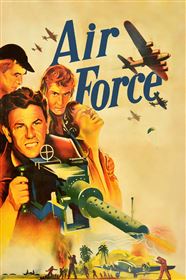
Air Force
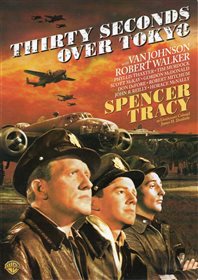
Thirty Seconds Over Tokyo
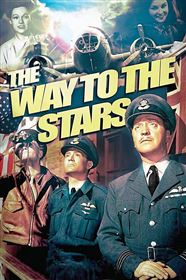
The Way to the Stars
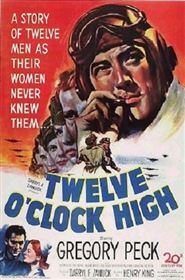
Twelve O'Clock High
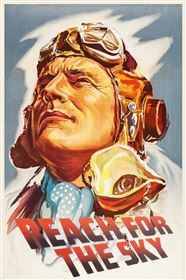
Reach for the Sky
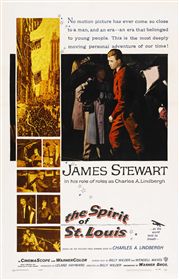
The Spirit of St. Louis
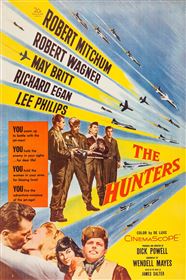
The Hunters
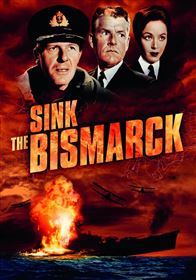
Sink the Bismarck!
633 Squadron
The Blue Max
Battle of Britain
Spitfire
(DVD)
10/1/2013
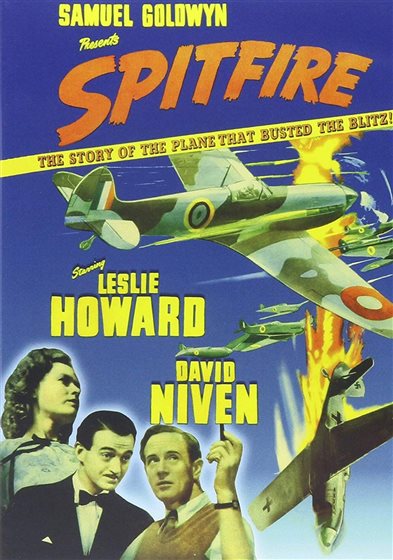
Spitfire
(DVD)
7/9/2015
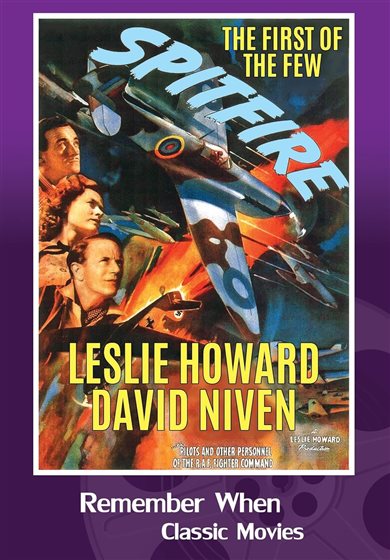
Spitfire
(DVD)
11/11/2022
Spitfire
(DVD, Keep Case (Std.))
5/6/2008
Spitfire
(DVD, Keep Case (Std.))
4/21/2015
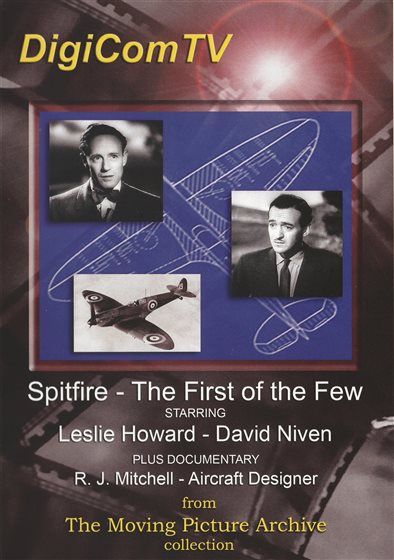
Spitfire: The First of the Few
(DVD, Keep Case (Std.))
12/1/2010