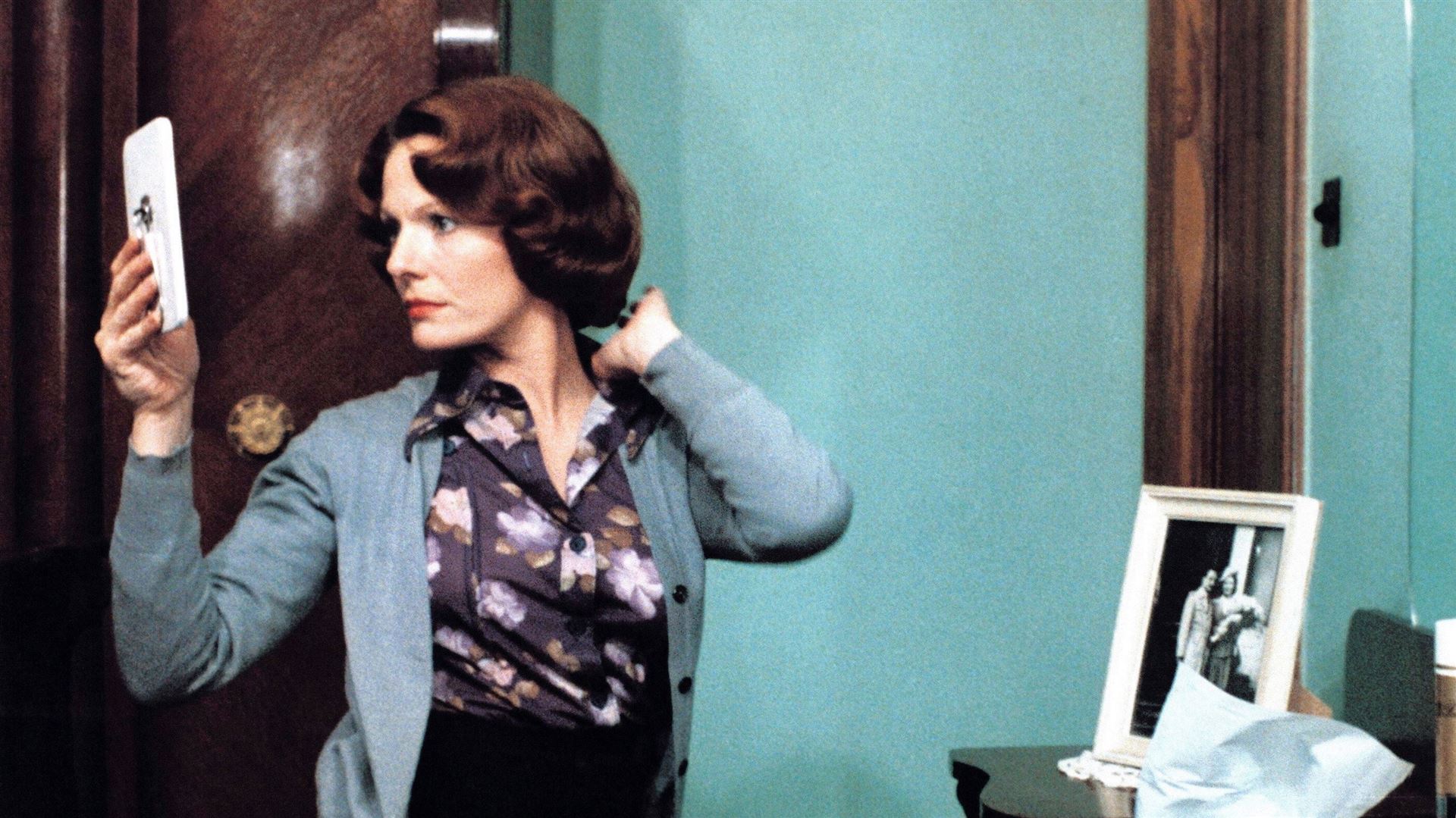


Jeanne Dielman, 23, quai du commerce, 1080 Bruxelles (1975)
Drama · 3h 21m · 1/23/2024


Description
For three hours and twenty-one minutes—each of whose passage Akerman intends the viewer to feel—Jeanne Dielman captures three days in the life of the titular housewife with unwavering attentiveness. When asked by the visual-arts journal Camera Obscura about the film's feminist aims, Akerman explained that it counters the historical consideration of all things domestic as "the lowest in the hierarchy of film images." Jeanne cooks, makes the bed, shops for groceries, and eats dinner with her aloof teenage son. These dull household activities are captured in minutes-long, unbroken shots that encourage our sustained concentration. We begin to notice the repetitiveness of Jeanne's actions, which—accented by Akerman's sharp, symmetrical compositions—take on a hypnotic quality somewhere between mechanical roteness and the lulling comfort of ritual. This deep immersion in the mundanities of Jeanne's life absorbs the shock of our discovery that she has a part-time gig as a prostitute: every afternoon, she receives a male client with the same vacant look with which she peels potatoes. Made with a crew composed mostly of women (to make a point, Akerman later said), the film captures Jeanne (Delphine Seyrig) from a frontal position, and the camera rests at Akerman's eye level, which is significantly lower than the Hollywood standard. This choice frames the viewer's relationship to Jeanne as a meeting of "two souls face to face equally," in Akerman's words. Seyrig's affectless, Bressonian performance style transmits the spirit of a woman flattened by life; she is neither a doting mother cloyingly infatuated with her son nor a titillating sexpot. Her laborious investment in men and the ease with which she defers to their desires convey impassivity and alienation.
Release Country
United StatesRelease Date
1/23/2024Media Type
MovieAudio
 |
French | PCM |  |
Digital Copy
Not IncludedStudio
Olympic Films/Paradise Films/Unité Trois/Ministère de la Culture Française de Belgique/Centre du Cinéma et de l’Audiovisuel de la Fédération Wallonie-Bruxelles/Cinematek/Fondation Chantal Akerman/Janus Films/The Criterion CollectionSubtitles
 English
Video Format
1080pAspect Ratio
1.66:1Cover Type
Digipack , Slip CoverDiscs

Streaming Rank Today

Chantal Akerman Masterpieces, 1968-1978

Delphine Seyrig
Jeanne Dielman
Jan Decorte
Sylvain Dielman
Henri Storck
1st Caller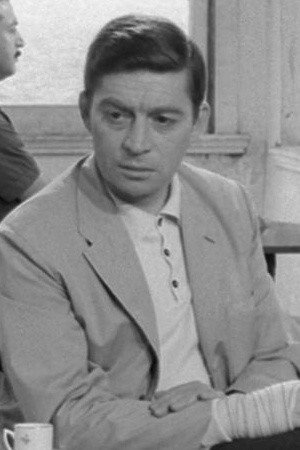
Jacques Doniol-Valcroze
2nd CallerYves Bical
3rd CallerChantal Akerman
Neighbor (voice) (uncredited)Chantal Akerman
Director
La Jetée

Woman in the Dunes

Persona

PlayTime
Wanda

Celine and Julie Go Boating

Stalker
My Dinner with André
Sans Soleil

Shoah
Distant Voices, Still Lives

Close-Up
A Brighter Summer Day

Safe

Taste of Cherry
Werckmeister Harmonies

Ten

Elephant

Goodbye, Dragon Inn
Tropical Malady
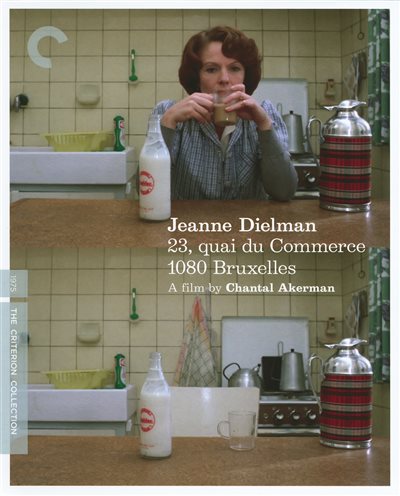
Jeanne Dielman, 23, quai du Commerce, 1080 Bruxelles
(Blu-ray, Keep Case (HD, Low))
5/9/2017
$19.98
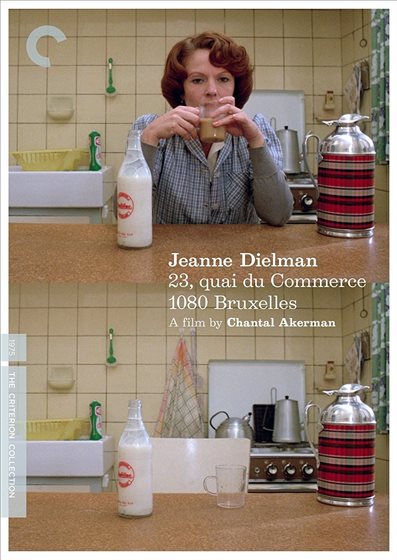
Jeanne Dielman, 23, quai du Commerce, 1080 Bruxelles
(DVD, Keep Case (Std.))
5/9/2017
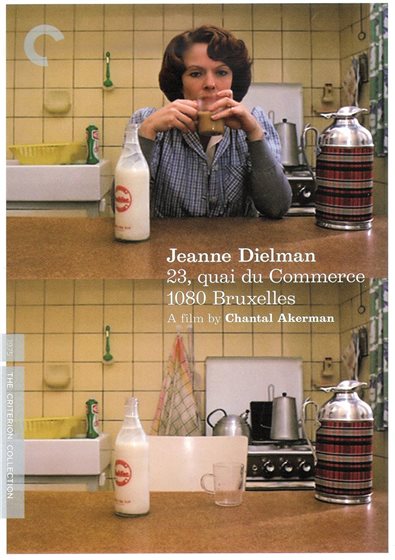
Jeanne Dielman, 23 Quai du Commerce, 1080 Bruxelles
(DVD, Keep Case (Std.))
8/25/2009
$75.00