Plácido (1961)
4/4/2013


Description
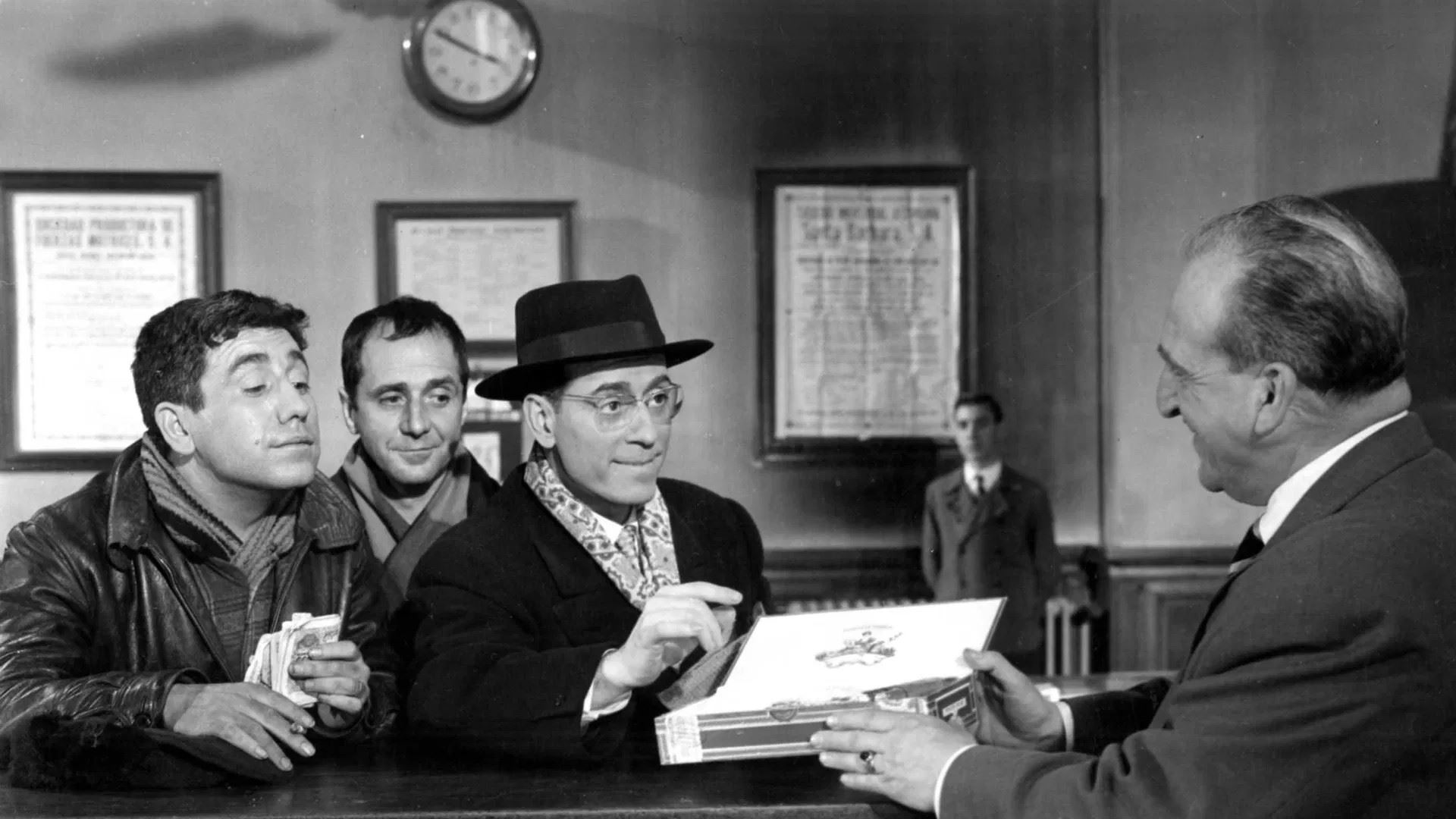
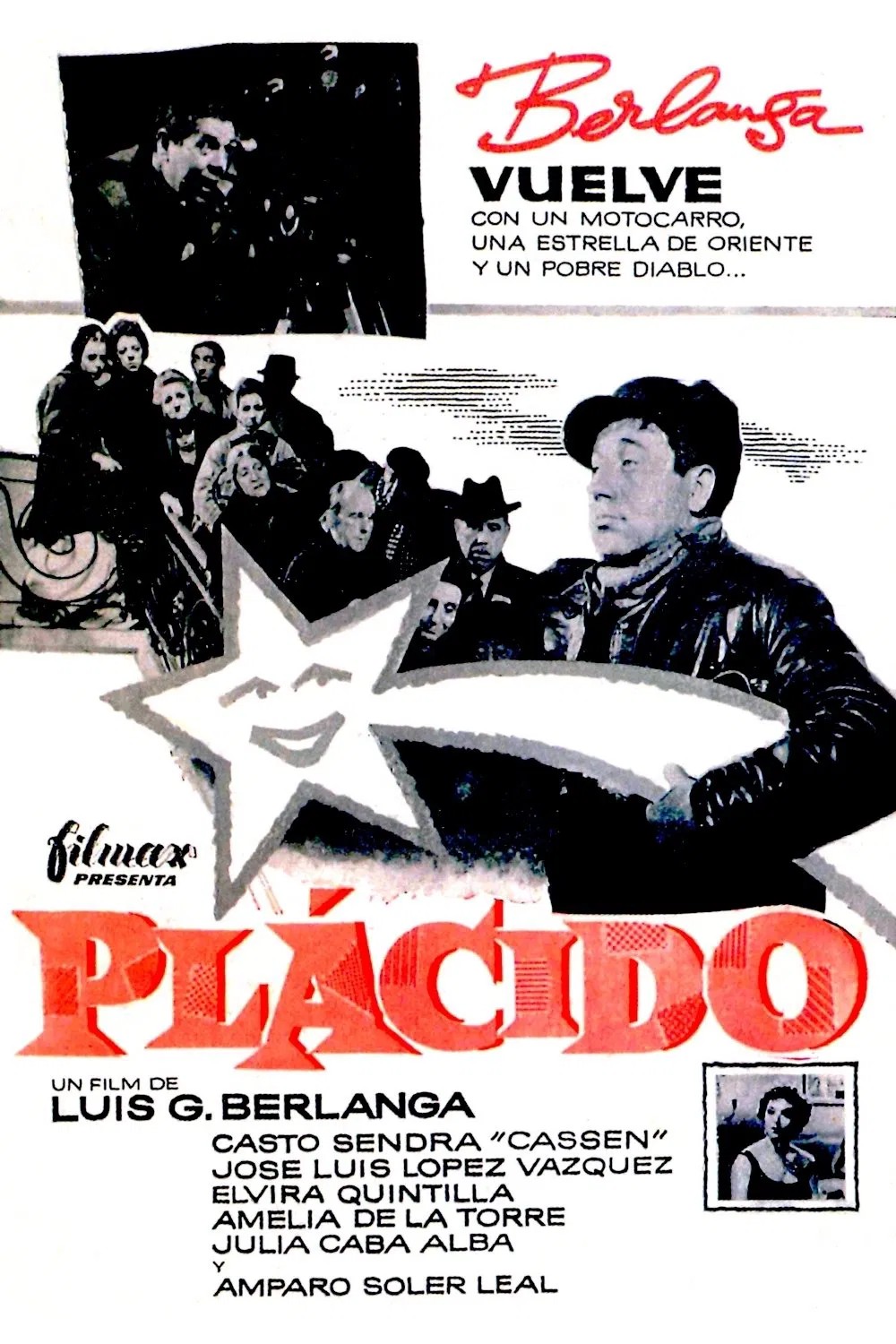
Plácido [ˈplaθiðo] is a 1961 Spanish black comedy film directed by Luis García Berlanga. It was nominated to the Academy Award as Best Foreign Language Film.[1] It was also entered into the 1962 Cannes Film Festival. In the film, affluent women in a provincial town organize a Christmas campaign of feeding the poor. They are actually both disgusted by the poor, and treating them as their personal possessions. Meanwhile, the impoverished owner of a motorcycle car tries to find enough money to pay for his vehicle. In a small provincial town, a group of "pious" women is fond of ostentatiously practicing charity. They organize a Christmas campaign under the motto "Feed a poor man at your table." In order to support the initiative, the sponsorship of a pot brand is sought, and a group of second-rate artists is invited. The artists have come expressly from the capital and are received enthusiastically at the train station. The humanitarian day is completed with a colorful parade, a public auction of the guests, and a dramatic radio broadcast. The person in charge of organizing this lavish chain of events is Quintanilla, who has hired Plácido for the occasion, a poor man who must utilize the motorcycle car that he has just acquired and has not yet begun to pay for. The hectic activity in which Plácido is involved prevents him from paying the first payment on the vehicle on time, which expires that same night. From that moment, Placido tries by all means to find a solution to his problem because his vehicle is what he uses to earn a living. However, he is taken from one place to another, involved in a series of unexpected incidents, including a comedy of errors involving an elderly beggar with heart problems. The film is a race against time to get the money paid before the deadline expires. Berlanga's social satire pokes fun at rich people trying to soothe their consciences by helping a poor person for one day. Along the way, we see their disgust at being near the poor, debates over whether it's better to choose a street person or an elderly poor person, and showing off "their" poor person to their friends as though they were a possession. Berlanga also pokes fun at actors more concerned about photo ops appearing to show them as charitable than actually being charitable.



Cassen
Plácido Alonso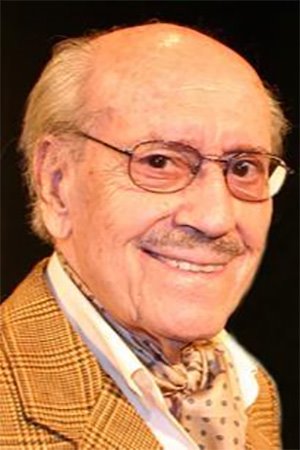
José Luis López Vázquez
Gabino Quintanilla
Elvira Quintillá
Emilia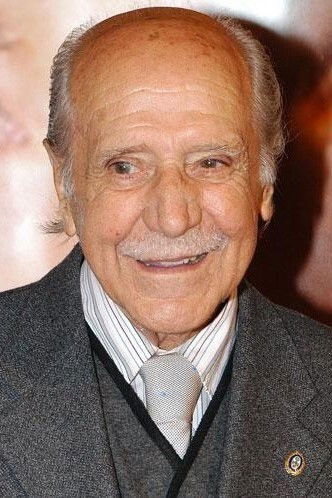
Manuel Alexandre
Julián AlonsoMario de Bustos
Don RodolfoMaría Francés
Hermana de la CaridadMari Carmen Yepes
Martita (as Carmen Yepes)Jesús Puche
Jefe de estaciónRoberto Llamas
Damián OlmedoAmelia de la Torre
Doña Encarna de GalánJuan G. Medina
Don ArturoJosé María Caffarel
ZapaterXan das Bolas
Rivas
Fernando Delgado
RepresentanteLaura Granados
ErikaJuan Manuel Simón
Roberto Bonifaz, el joven galánCarmen Valencia
Maruja ColladoGloria Osuna
LaliFrancisco Aguilera
El actor
Juan Torres
Dueño de la cesta
Lepe
Padre de EmiliaJosé Orjas
NotarioXavier Vivé
Edmundo GalánCamino Delgado
Señora del notarioFélix Fernández
Pobre en casa de GalánCarmen Pradillo
Criada mayor de los GalánErasmo Pascual
Pasante de la notaríaJ.C. Tejeiro
Ayudante del pasante
Agustín González
Álvaro Gil
Julia Delgado Caro
María de HelgueraAntonio Gandía
Pascual
José Franco
Matías HelgueraAmparo Gómez Ramos
Antonia, criada de los HelgueraJosé Gavilán
DentistaCarme Contreras
Maruja
Luis Ciges
Pobre en casa de HelgueraAngel Company
El sacerdoteJulia Caba Alba
Concheta
Antonio Ferrandis
RamiroEmilio Sancho
Don CarlosVicente Llosa
Pobre en casa del notario
Amparo Soler Leal
Marilú MartínezMary Alda
Viviana, hermana del dentistaCarmina Farguell
Hermana del dentista #2
Luis García Berlanga
DirectorLuis García Berlanga
Writer
Rafael Azcona
WriterJosé Luis Colina
WriterJosé Luis Font
Writer
The Executioner

Bilbao
Miracle In Milan
Divorce Italian Style

The Millionairess
Big Deal on Madonna Street

The Apartment

The Exterminating Angel
Death of a Cyclist
The Discreet Charm of the Bourgeoisie
Viridiana

Nine Queens
Bread and Chocolate

A Fistful of Dynamite
That Obscure Object of Desire
The Phantom of Liberty
The Milky Way

Belle de Jour

Simon of the Desert
Diary of a Chambermaid


