Paul Wegener
Biography
Paul Wegener (11 December 1874 – 13 September 1948) was a German actor, writer and film director known for his pioneering role in German expressionist cinema. Contents * 1 Stage and Early Film Career * 2 Later Film Career * 3 Life Under Nazi Regime * 4 Death [edit] Stage and Early Film Career At the age of twenty Wegener decided to end his law studies and concentrate on acting, touring the provinces before joining Max Reinhardt's acting troupe in 1906. In 1912, he turned to the new medium of motion pictures and appeared in the 1913 version of The Student of Prague. It was while making this film that he first heard the old Jewish legend of the Golem and proceeded to adapt the story to film, co-directing and co-writing the script with Henrik Galeen. His first version of the tale The Golem (1915, now lost) met with success and firmly established Wegener's reputation. In 1917, he made a parody of the story called Der Golem und die Tänzerin, but it was his reworking of the tale, The Golem: How He Came into the World (1920) which stands as one of the classics of German cinema and helped to cement Wegener's place in cinematic history. Wegener did more for the development of the film industry in Germany than any other. Another of his early films was Der Yoghi (1916), in which he played the role of the yogi and young inventor, and which provided him with the opportunity to accommodate three of his interests, trick photography (it was one of the first films to feature invisibility), the supernatural and Eastern mysticism. [edit] Later Film Career In 1926 he appeared in his only Hollywood film, Rex Ingram's The Magician, in which he played the Aleister Crowley-esque Oliver Haddo in an adaptation of Somerset Maugham's story. 1928 saw another of Wegener's key roles, when he starred alongside Brigitte Helm in his old collaborator Galeen's adaptation of Hanns Heinz Ewers' Alraune, playing the Frankenstein-like Professor ten Brinken. In 1932 Wegener made his sound debut in Richard Oswald's black comedy/horror film Unheimliche Geschichten, in which he took great delight in sending himself up as well as the whole expressionist movie genre. [edit] Life Under Nazi Regime When in 1933 The National Socialists came to political prominence and theatre companies were disbanded and many of the actors and directors were arrested, persecuted or exiled, Wegener, a pacifist and unwanted by the new political power, remained in Germany and continued his work on stage and screen despite the limitation under the Nazi regime. As the war closed Wegener was one of the first to rebuild cultural life in Berlin. Despite ill-health he became president of an organisation to improve standards for its inhabitants. [edit] Death Wegener last film was Der Grosse Mandarin (1948). In July 1948 he reprised his old role as Nathan the Wise at the Deutschen Theatre, but in the very first scene he collapsed and the curtain was brought down. Two months later, on 13 September 1948, he died in his sleep. He was married six times, twice to the actress Lyda Salmonova (his co-star on several occasions), who became his widow.

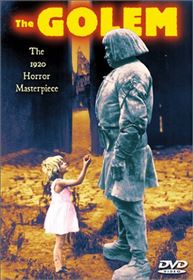
Der Golem
Der Golem / The Golem

Madame DuBarry
(unconfirmed)
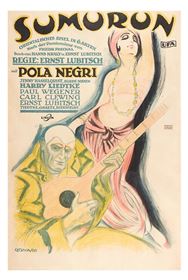
Sumurun
Der alte Scheich
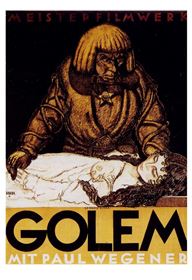
Der Golem
Golem

Lo studente di Praga
Balduin, a Student
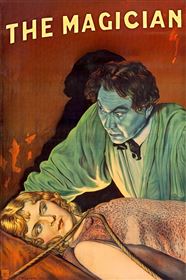
The Magician
Oliver Haddo
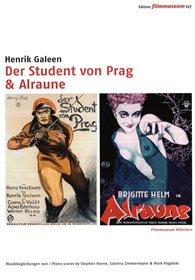
A Daughter of Destiny
Prof. Jakob ten Brinken

Der große Mandarin
-

Hochzeit auf Bärenhof
Leonhard von Krakow
Hans Westmar
Kuprikoff
Der große Mandarin
-
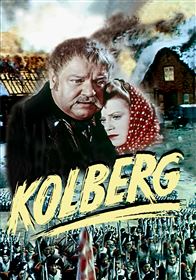
Burning Hearts
Stadtkommandant Loucadou
Hochzeit auf Bärenhof
Leonhard von Krakow

Der große König
Gen. Czernitscheff

My Life for Ireland
Sir George Beverley

Hans Westmar
Kuprikoff
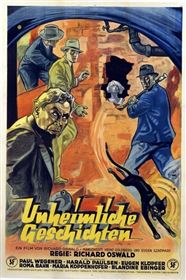
Unholy Tales
Mörder
A Daughter of Destiny
Prof. Jakob ten Brinken
The Magician
Oliver Haddo
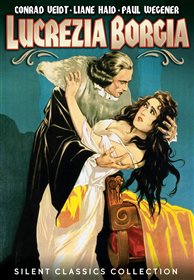
Lucrezia Borgia
Micheletto
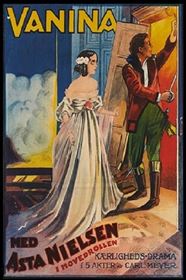
Vanina oder Die Galgenhochzeit
Gouverneur von Turin

The Loves of Pharaoh
Samlak
Der Golem
Der Golem / The Golem
Sumurun
Der alte Scheich
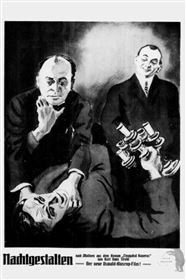
Figures of the Night
Thomas Bezug
Madame DuBarry
(unconfirmed)
The Pied Piper of Hamlin
Fahrender Spielmann (Traveling Minstrel)
Roses and Thorns

Der Golem und die Tänzerin
Der Golem
Golem
Lo studente di Praga
Balduin, a Student


