John Buchan
Biography
John Buchan, 1st Baron Tweedsmuir PC GCMG GCVO CH (26 August 1875 – 11 February 1940) was a Scottish novelist, historian and Unionist politician who served as Governor General of Canada, the 15th since Canadian Confederation. After a brief legal career Buchan simultaneously began both his writing career and his political and diplomatic career, serving as a private secretary to the colonial administrator of various colonies in Southern Africa. He eventually wrote propaganda for the British war effort in the First World War. Once he was back in civilian life Buchan was elected Member of Parliament for the Combined Scottish Universities, but he spent most of his time on his writing career, notably writing The Thirty-Nine Steps and other adventure fiction. In 1935 he was appointed Governor General of Canada by George V, king of Canada, on the recommendation of Prime Minister of Canada Richard Bennett, to replace the Earl of Bessborough. He occupied the post until his death in 1940. Buchan proved to be enthusiastic about literacy, as well as the evolution of Canadian culture, and he received a state funeral in Canada before his ashes were returned to the United Kingdom. Life as an author and politician Buchan entered into a career in diplomacy and government after graduating from Oxford, becoming the private secretary to Alfred Milner, who was then the High Commissioner for Southern Africa, Governor of Cape Colony, and colonial administrator of Transvaal and the Orange Free State, putting Buchan in what came to be known as Milner's Kindergarten. He also gained an acquaintance with a country that would feature prominently in his writing, which he resumed upon his return to London, at the same time entering into a partnership in the Thomas Nelson & Son publishing company and becoming editor of The Spectator. Buchan also read for and was called to the bar in 1901, though he did not practice as a lawyer, and on 15 July 1907 married Susan Charlotte Grosvenor— daughter of Norman Grosvenor and a cousin of the Duke of Westminster. Together, Buchan and his wife had four children, Alice, John, William, and Alastair, two of whom would spend most of their lives in Canada. Buchan wrote Prester John in 1910, the first of his adventure novels set in South Africa, and the following year he suffered from duodenal ulcers, which also inspired one of his characters in later books. At the same time, Buchan ventured into the political arena, and ran as a Unionist candidate in a Scottish Borders constituency; he supported free trade, women's suffrage, national insurance, and curtailing the powers of the House of Lords. With the outbreak of the First World War, Buchan went to write for the British War Propaganda Bureau and worked as a correspondent in France for The Times. He continued to write fiction, and in 1915 published his most famous work, The Thirty-Nine Steps, a spy-thriller set just prior to World War I. Recognised for his abilities, Buchan was appointed as the Director of Information in 1917, under the Lord Beaverbrook and also assisted Charles Masterman in publishing a monthly magazine that detailed the history of the war, the first edition appearing in February 1915 (and later published in 24 volumes as Nelson's History of the War). It was difficult, given his close connections to many of Britain's military leaders, for Buchan to be critical of the British Army's conduct during the conflict. Following the close of the war, Buchan turned his attention to writing on historical subjects, along with his usual thrillers and novels. By the mid-1920s, he was living in Elsfield and had become president of the Scottish Historical Society and a trustee of the National Library of Scotland, and he also maintained ties with various universities. In 1935, Buchan's literary work was adapted to the cinematic theatre with the completion of Alfred Hitchcock's The 39 Steps, starring Robert Donat as Richard Hannay, though with Buchan's story much altered. This came in the same year that Buchan was honoured with appointment to the Order of St. Michael and St. George on 23 May, as well as being elevated to the peerage, when he was entitled by King George V as Baron Tweedsmuir of Elsfield in the County of Oxford on 1 June. Legacy Buchan's 100 works include nearly thirty novels, seven collections of short stories, and biographies of Sir Walter Scott, Caesar Augustus, and Oliver Cromwell. Buchan was awarded the James Tait Black Memorial Prize for his biography of the Marquess of Montrose, but the most famous of his books were the spy thrillers, and it is for these that he is now best remembered. List of principal works Fiction: Sir Quixote of the Moors (1896) John Burnet of Barns (1898) No-Man's Land (1899) Grey Weather (1899) A Lost Lady of Old Years (1899) The Half-Hearted (1900) The Watcher by the Threshold (1902) A Lodge in the Wilderness (1906) Prester John (1910) The Moon Endureth (1912) Salute to Adventurers (1915) The Thirty-Nine Steps (1915) The Power House (1916) Greenmantle (1916) Mr Standfast (1919) The Path of the King (1921) Huntingtower (1922) Midwinter (1923) The Three Hostages (1924) John Macnab (1925) The Dancing Floor (1926) Witch Wood (1927) The Runagates Club (1928) The Courts of the Morning (1929) Castle Gay (1930) The Blanket of the Dark (1931) The Gap in the Curtain (1932) The Magic Walking Stick (1932) A Prince of the Captivity (1933) The Free Fishers (1934) The House of the Four Winds (1935) The Island of Sheep (1936) Sick Heart River (US title: Mountain Meadow) (1941) The Long Traverse (US title: Lake of Gold) (1941) The Far Islands and Other Tales of Fantasy (1984) Non-fiction: Scholar-Gipsies (1896) The African Colony (1903) The Law Relating to the Taxation of Foreign Income (1905) Some Eighteenth Century Byways (1908) Sir Walter Raleigh (1911) What the Home Rule Bill Means (1912) The Marquis of Montrose (1913) Andrew Jameson, Lord Ardwall (1913) Nelson's History Of The War. 24 volumes (1914–1919) Britain's War by Land (1915) The Achievement of France (1915) Ordeal by Marriage (1915) The Future of the War (1916) The Battle of the Somme, First Phase (1916) The Purpose of War (1916) The Battle of Jutland (1916) Poems, Scots and English (1917) The Battle of the Somme, Second Phase (1917) These for Remembrance (1919) The Battle Honours of Scotland 1914–1918 (1919) The History of the South African Forces in France (1920) Francis and Riversdale Grenfell (1920) The Long Road to Victory (1920) A History of the Great War (1922) A Book of Escapes and Hurried Journeys (1922) The Last Secrets (1923) A History of English Literature (1923) Days to Remember (1923) Some Notes on Sir Walter Scott (1924) Lord Minto, a Memoir (1924) The History of the Royal Scots Fusiliers 1678–1918 (1925) The Man and the Book: Sir Walter Scott (1925) Two Ordeals of Democracy (1925) Homilies and Recreations (1926) The Kirk in Scotland (with George Adam Smith) (1930) Montrose and Leadership (1930) Lord Rosebery, 1847–1929 (1930) The Novel and the Fairy Tale (1931) Julius Caesar (1932) Andrew Lang and the Borders (1932) The Massacre of Glencoe (1933) The Margins of Life (1933) Gordon at Khartoum (1934) Oliver Cromwell (1934) The King's Grace (1935) Augustus (1937) The Interpreter's House (1938) Presbyterianism Yesterday, Today and Tomorrow (1938) Memory Hold-the-Door (US title: Pilgrim's Way) (1940) Comments and Characters (1940) Canadian Occasions (1940)

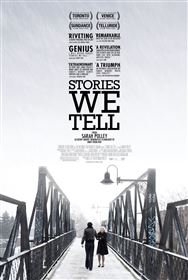
Stories We Tell
Himself - Storyteller
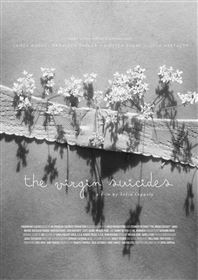
The Virgin Suicides
John (Lydia's Boss) (uncredited)
Stories We Tell
Himself - Storyteller
The Virgin Suicides
John (Lydia's Boss) (uncredited)


