Theo van Gogh
Biography
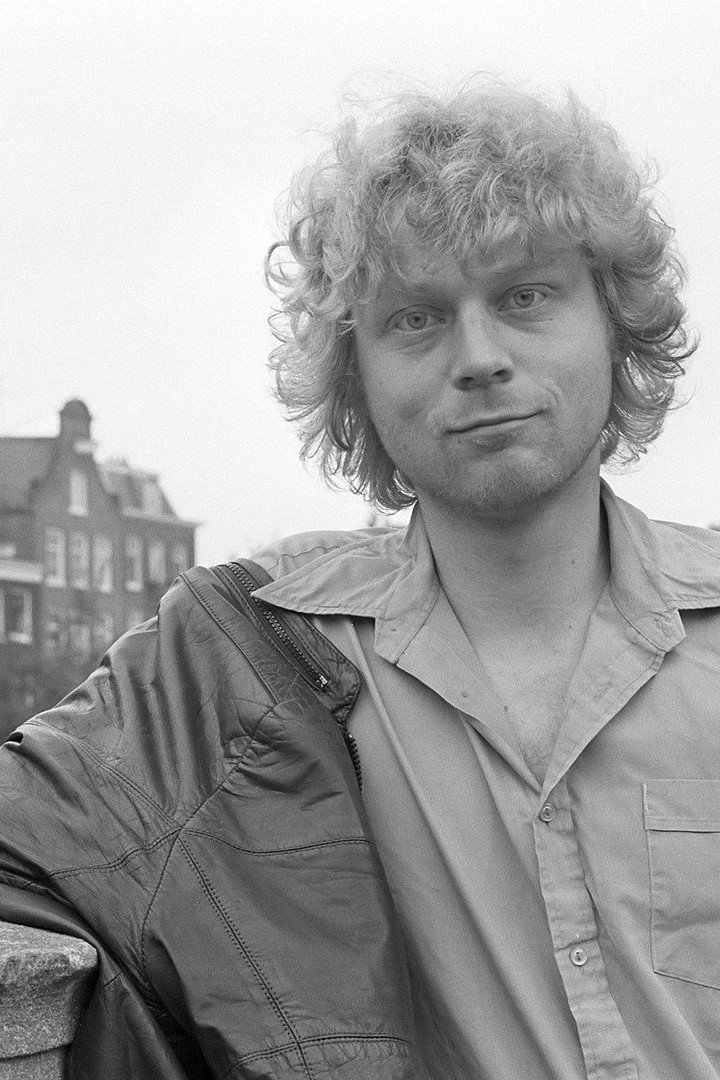
Theo van Gogh (pronounced ['te?jo? v?n'x?x]) (July 23, 1957–November 2, 2004) was a Dutch film director, television producer, publicist and actor. He was a descendant of Theo van Gogh, the brother of painter Vincent van Gogh. He was murdered by Mohammed Bouyeri in 2004. Life Theo van Gogh was born in The Hague. His great-grandfather was art dealer Theo van Gogh, brother of Vincent van Gogh. His father, Johan van Gogh, was a member of the Dutch secret service ('AIVD', then called 'BVD'). Theo's uncle, also named Theo, was executed as a resistance fighter during the German occupation. After dropping out of law school, Theo van Gogh became a stage manager. His self-proclaimed passion was filmmaking, and he debuted as a director with the movie Luger (1981). He received a Gouden Kalf ("Golden Calf", the Dutch equivalent of the Oscar) for Blind Date (1996) and In het belang van de staat ("In the Interest of the State", 1997). For the latter, he also received a "Certificate of Merit" from the San Francisco International Film Festival. As an actor he appeared in the production De noorderlingen ("The Northerners", 1992). After that, he worked for television and wrote provocative columns for Metro and other newspapers. Van Gogh was a writer of polemic prose. His often aggressive tone and personal animosities got him involved in a number of public lawsuits against other writers and public figures, and got him fired as a columnist at a succession of magazines and periodicals. This forced him to seek refuge in his own website, called De Gezonde Roker ("The Healthy Smoker").[1] The site's name, which is also the title of one of his books, was an allusion to his notorious chain smoking and to the 'politically correct' negative stance towards smoking in society. In general, Van Gogh had a strongly nihilistic outlook on life, as displayed by episodes of heavy drinking, his open use of the drug cocaine and a cynical view of love relationships. (Later in life, he would adopt a healthier lifestyle, claiming it was for the sake of his son.) Although he seemed to enjoy his life, he said he would not mind dying if it were not for his young son. His last book (2003) was Allah weet het beter ("Allah Knows Best") in which he presented his views on Islam in his typically cynical, mocking tone. He was a well-known critic of Islam, particularly after the September 11, 2001 attacks. He supported the nomination of the liberal (former PvdA Labour Party), Somalian-born female politician Ayaan Hirsi Ali for Dutch parliament. Political views Van Gogh was a member of the Dutch republican society Republikeins Genootschap which advocates the abolition of the Dutch monarchy, and a friend and supporter of the controversial Dutch politician Pim Fortuyn who was assassinated in 2002. He was also a staunch supporter of the 2003 invasion of Iraq, although he revised his stance to a more neutral one in 2004. Controversial statements Although Van Gogh was known as a friendly, tolerant character in person, in the 1980s he became a newspaper columnist, and through the years he used his columns to vent his anger at politicians, actors, film directors, writers and other people he considered to be part of "the establishment". He incurred the anger of leading members of the Jewish community by making comments about what he saw as the Jewish preoccupation with Auschwitz. This quote from a 1991 magazine interview is a typical example of such commentary. Van Gogh explained a "smell of caramel" by stating that "today they're only burning diabetic Jews". When he was criticized by the Jewish historian Evelien Gans, he wrote in Folia Civitatis magazine: "I suspect that Ms. Gans gets wet dreams about being fucked by Dr Mengele." He also expressed the wish that she would sue him so that she would have to explain in court why his remarks were false. Van Gogh rejected every form of religion. In the late 1990s he started to focus on Islam. He felt strongly that political Islam is an increasing threat to liberal western societies, and said that, if he'd been younger, he would have emigrated to the U.S.A., which he considered to be a beacon of light in a darkening world. One of the few politicians who seemed to be exempt from Van Gogh's criticisms was the conservative leader Pim Fortuyn, who was assassinated in 2002. Van Gogh usually referred to him as the divine baldhead. After the death of Fortuyn, Van Gogh continued attacking the remaining members of the Lijst Pim Fortuyn as he did other politicians. His political idol from then on was Ayaan Hirsi Ali. Submission Working from a script written by Ayaan Hirsi Ali, van Gogh created the 10-minute movie Submission. The movie deals with the topic of violence against women in Islamic societies; telling the stories of four abused Muslim women. The title itself, "Submission", is a translation of the word "Islam" into English. In the film, women's naked bodies are veiled with semi-transparent shrouds as they kneel in prayer, telling their stories as if they are speaking to Allah. Qur'anic verses unfavourable to women are projected onto their bodies in Arabic. In August 2004, after the movie's broadcast on Dutch public TV, newspaper De Volkskrant reported on claims of plagiarism against Hirsi Ali and Van Gogh, made by internet journalist Francisco van Jole. Van Jole said the duo had "aped" the ideas of Iranian-American video artist Shirin Neshat. Neshat's work, which made abundant use of Arabic text projected onto bodies, had been shown in the Netherlands in 1997 and 2000. After the broadcast of Submission, Van Gogh and Hirsi Ali also received death threats. Van Gogh did not take these very seriously and refused any protection, reportedly telling Ayaan Hirsi Ali: "Nobody kills the village idiot", a term he frequently used to refer to himself.
La séquence des barres parallèles
The Corpulent Man
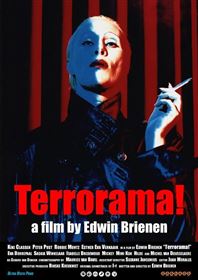
Terrorama!
religious maniac
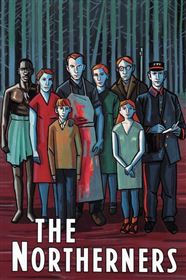
The Northerners
Dikke Willie
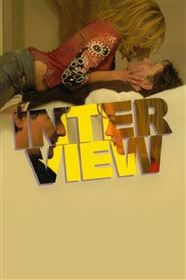
Interview
Self
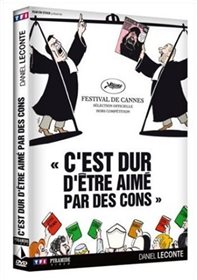
C'est dur d'être aimé par des cons
Self (archive footage) (uncredited)

Religulous
Himself (archive footage) (uncredited)
Religulous
Himself (archive footage) (uncredited)
C'est dur d'être aimé par des cons
Self (archive footage) (uncredited)
Interview
Self
Terrorama!
religious maniac
The Northerners
Dikke Willie
La séquence des barres parallèles
The Corpulent Man


