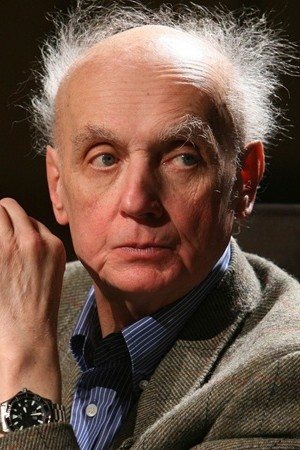
Wojciech Kilar
Biography
Wojciech Kilar (Polish pronunciation: [ˈvɔjt͡ɕex kilar] (pronounced phonetically: Voy-cheh Kee-lahr) ; born 17 July 1932) is a Polish classical and film music composer. Wojciech Kilar belonged (together with Boleslaw Szabelski, his student Henryk Górecki and Krzysztof Penderecki) to the Polish Avant-garde music movement of the Sixties. In 1977 Kilar was one of the founding members of the Karol Szymanowski Society, based in the mountain town of Zakopane. Kilar chaired the Katowice chapter of the Association of Polish Composers for many years and from 1979-81 was vice chair of this association's national board. He was also a member of the Repertoire Committee for the "Warsaw Autumn" International Festival of Contemporary Music. In 1991 Polish filmmaker Krzysztof Zanussi made a biographical film about the composer titled Wojciech Kilar. Having received critical success as a classical composer, Kilar scored his first domestic film in 1959, and has since gone on to write music from some of Poland's most acclaimed directors, including Krzysztof Kieslowski, Krzysztof Zanussi, Kazimierz Kutz and Andrzej Wajda. He worked on over 100 titles in his home country, including internationally recognised titles such as Bilans Kwartalny (1975), Spirala (1978), Constans (1980), Imperativ (1982), Rok Spokojnego Slonca (1984), and Zycie za Zycie (1991), plus several others in France and across other parts of Europe. He made his English-language debut with Francis Ford Coppola's adaptation of Dracula. His other English language features — Roman Polanski's trio Death and the Maiden (1994), The Ninth Gate (1999) and The Pianist (2002), and Jane Campion's The Portrait of a Lady (1996) — were typified by his trademark grinding basses and cellos, deeply romantic themes and minimalist chord progressions. In addition to his film work, Kilar continues to write and publish purely classical works, which have included a horn sonata, a piece for a wind quintet, several pieces for chamber orchestra and choir, the acclaimed Baltic Canticles, the epic Exodus (famous as the trailer music from Schindler's List), a Concerto for Piano and Orchestra dedicated to Peter Jablonski, and his major work, the “September Symphony” (2003). Works The vast majority of Wojciech Kilar's work remains undiscovered by the music public at large, despite having written music for well over 100 films, including: Bram Stoker's Dracula, Death and the Maiden, The Portrait of a Lady, The Ninth Gate, Pan Tadeusz, The Pianist, Zemsta, and We Own the Night. Presently Kilar composes symphonic music, chamber works and works for solo instruments. January 2001 saw the world premiere of his Missa pro pace (composed for a full symphony orchestra, mixed choir and a quartet of soloists) at the National Philharmonic in Warsaw. The work was written to commemorate the Warsaw Philharmonic's centennial. In December 2001, it was performed again in the Paul VI Hall at the Vatican in the presence of Pope John Paul II. His 1984 composition Angelus was used in the motion picture City of Angels; Orawa, from 1988, found its use in the Santa Clara Vanguard's 2003 production, "Pathways", as well as Grants Pass High School's 2010 production, "Traffic", which named them the 2010 NWAPA champion. For most of his life, Kilar's output has been dominated by music for film with a small but steady stream of concert works. Post 2000, he has turned to "music of a singular authorship". Since his 2003 September Symphony, (Symphony No.3), a four-movement full scale symphony written for the composer's friend Antoni Wit, Kilar has returned to absolute music. Since 2003, Kilar has been steadily producing large scale concert works. His Lament (2003) for unaccompanied mixed choir, his Symphony No.4 Sinfonia de Motu (Symphony of Motion) from 2005 written for large orchestra, choir and soloists, his Magnificat Mass from 2006, Symphony No.5 Advent Symphony from 2007 and another large mass, Te Deum premiered in November 2008. Kilar was quoted as saying that he believed he had discovered the philosopher's stone, and that "there was nothing more beautiful than the solitary sound or concord that lasted eternally, that this was the deepest wisdom, nothing like our tricks with sonata allegros, fugues, and harmonics." Kilar's works have been performed by several major international orchestras, including the Philadelphia Orchestra, the Cleveland Orchestra, and the New York Philharmonic. Selected film music: Nikt nie woła (Nobody's calling) (1960) Tarpany (Wild Horses) (1962) Głos z tamtego świata (Voice from beyond) (1962) Milczenie (Silence) (1963) Trzy kroki po ziemi (Three steps on Earth) (1965) Piekło i niebo (Hell and heaven) (1966) Bicz boży (God's whip) (1967) The Doll (1968 film) (Lalka) (1968) Rejs (Cruise) (1970) Bolesław Śmiały (King Boleslaus the Bold) (1972) Opętanie (Obsession) (1973) Ziemia obiecana (Land of Promise) (1974) Smuga cienia (The shadow line) (1976) Tredowata (1976) Ptaki ptakom (Bords to birds) (1977) Barwy ochronne (Camouflage) (1977) Spirala (Spiral) (1978) Rodzina Polanieckich (TV Series) (1978) Le Roi et l'Oiseau (The King and the Mockingbird) (1980) From A Far Country (1981) Przypadek (Blind chance) (1982) Paradigma (1985) Chronicle of Amorous Events(1986) Salsa (1988) Gdzieśkolwiek jest, jesliś jest (Wherever you are, if you are) (1988) Stan posiadania (Inventory) (1989) Życie za życie (about Maximilian Kolbe) (1991) Bram Stoker's Dracula (1992) Dotknięcie ręki (A touch of the hand) (1992) Death and the Maiden (1994) The Portrait of a Lady (1996) Deceptive Charm (1996) Brat naszego Boga (Our God's brother) (1997) The Truman Show (1998) (parts from Requiem Father Kolbe) The Ninth Gate (1999) Pan Tadeusz (1999) Life As a Fatal Sexually Transmitted Disease (2000) Le Pianiste (2002) Zemsta (Revenge) (2002) We Own the Night (2007) Il Sole Nero (2007) List of major awards: The French Lili Boulanger Prize for composition (1960) The Polish Ministry of Culture and Arts Award (1967 and 1976) The Polish Composers Union Award (1975) The French Prix Louis Delluc (1980) The Alfred Jurzykowski Foundation Award (1984, USA) The Polish Cultural Foundation Award (2000) The 1992 ASCAP Award from the American Society of Composers, Authors, and Producers in Los Angeles for his score for the Coppola horror film Bram Stoker's Dracula. The prize for best score in a horror film, Bram Stoker's Dracula (San Francisco, 1992) 2002 BAFTA Awards - Nominee Anthony Asquith Award for Film Music - The Pianist (2002 film)