Franklin D. Roosevelt
Biography
Franklin Delano Roosevelt (January 30, 1882 – April 12, 1945) also known by his initials, FDR, was the 32nd President of the United States (1933–1945) and a central figure in world events during the mid-20th century, leading the United States during a time of worldwide economic depression and total war. The only American president elected to more than two terms, he facilitated a durable coalition that realigned American politics for decades. With the bouncy popular song "Happy Days Are Here Again" as his campaign theme, FDR defeated incumbent Republican Herbert Hoover in November 1932, at the depth of the Great Depression. Energized by his personal victory over paralytic illness, FDR's unfailing optimism and activism contributed to a renewal of the national spirit. He worked closely with Winston Churchill and Joseph Stalin in leading the Allies against Germany and Japan in World War II, but died just as victory was in sight. In his first hundred days in office, which began March 4, 1933, Roosevelt spearheaded major legislation and issued a profusion of executive orders that instituted the New Deal—a variety of programs designed to produce relief (government jobs for the unemployed), recovery (economic growth), and reform (through regulation of Wall Street, banks and transportation). The economy improved rapidly from 1933 to 1937, but then relapsed into a deep recession. The bipartisan Conservative Coalition that formed in 1937 prevented his packing the Supreme Court or passing any considerable legislation; it abolished many of the relief programs when unemployment diminished during World War II. Most of the regulations on business were ended about 1975–85, except for the regulation of Wall Street by the Securities and Exchange Commission, which still exists. Along with several smaller programs, major surviving programs include the Federal Deposit Insurance Corporation, which was created in 1933, and Social Security, which Congress passed in 1935. As World War II loomed after 1938, with the Japanese invasion of China and the aggressions of Nazi Germany, FDR gave strong diplomatic and financial support to China and the United Kingdom, while remaining officially neutral. His goal was to make America the "Arsenal of Democracy" which would supply munitions to the Allies. In March 1941, Roosevelt, with Congressional approval, provided Lend-Lease aid to the countries fighting against Nazi Germany with Britain. With very strong national support, he made war on Japan and Germany after the Japanese attack on Pearl Harbor on December 7, 1941, calling it a "date which will live in infamy". He supervised the mobilization of the U.S. economy to support the Allied war effort. As an active military leader, Roosevelt implemented an overall war strategy on two fronts that ended in the defeat of the Axis Powers and the development of the world's first atom bomb. In 1942 Roosevelt ordered the internment of 100,000 Japanese American civilians. Unemployment dropped to 2%, relief programs largely ended, and the industrial economy grew rapidly to new heights as millions of people moved to new jobs in war centers, and 16 million men and 300,000 women were drafted or volunteered for military service. Roosevelt dominated the American political scene not only during the twelve years of his presidency, but also for decades afterward. He orchestrated the realignment of voters that created the Fifth Party System. FDR's New Deal Coalition united labor unions, big city machines, white ethnics, African Americans and rural white Southerners. Roosevelt's diplomatic impact also resonated on the world stage long after his death, with the United Nations and Bretton Woods as examples of his administration's wide-ranging impact. Roosevelt is consistently rated by scholars as one of the top three U.S. Presidents. A liberal and a Democrat, Roosevelt defined his ideological position as "a little left of center". Roosevelt is an Anglicized form of the Dutch surname 'Van Rosevelt' or 'Van Rosenvelt', meaning 'from field of roses.', with the vowel of rose. (The last syllable was pronounced by him with a schwa, or nondescript vowel, almost as vult.) One of the oldest families in New York State, the Roosevelts distinguished themselves in areas other than politics. One ancestor, Isaac Roosevelt, had served with the New York militia during the American Revolution. His mother named him after her favorite uncle Franklin Delano. The birthplace of FDR at Springwood Roosevelt was born on January 30, 1882, in the Hudson Valley town of Hyde Park, New York. His father, James Roosevelt, and his mother, Sara Ann Delano, were sixth cousins Franklin was their only child. Roosevelt grew up in an atmosphere of privilege. Sara was a possessive mother; James, 54 when Franklin was born, was considered by some as a remote father, though biographer Burns indicates James interacted with his son more than was typical at the time. Frequent trips to Europe made Roosevelt conversant in German and French. He learned to ride, shoot, row, and play polo and lawn tennis. Roosevelt also took up golf in his teen years, becoming a skilled long hitter. He learned to sail; his father gave him a sailboat which he named "New Moon". Roosevelt attended Groton School, an Episcopal boarding school in Massachusetts; ninety percent of the students were from families on the social register. He was heavily influenced by its headmaster, Endicott Peabody, who preached the duty of Christians to help the less fortunate and urged his students to enter public service. Forty years later Roosevelt said of Peabody, "It was a blessing in my life to have the privilege of Roosevelt was a "B" student. Roosevelt in 1899 sailing with father James and half-niece Helen Roosevelt went to Harvard College and lived in a suite which is now part of Adams House, in the "Gold Coast" area populated by wealthy students. Though he was a "C" student, he was a member of the Alpha Delta Phi fraternity, a cheerleader, and also editor-in-chief of The Harvard Crimson daily newspaper. Roosevelt entered Columbia Law School in 1904, but dropped out in 1907 after he passed the New York State Bar exam. Marriage and family life See also: Roosevelt family On March 17, 1905, Roosevelt married Eleanor despite the fierce resistance of his mother. they had six children, the first four in rapid succession: Anna Eleanor (1906–1975; age 69) James (1907–1991; age 83) Franklin Delano, Jr. (March 18, 1909 – November 7, 1909) Elliott (1910–1990; age 80) a second Franklin Delano, Jr. (1914–1988; age 74) John Aspinwall (1916–1981; age 65). Roosevelt's dog, Fala, also became well known as Roosevelt's companion during his time in the White House, and was called the "most photographed dog in the world." Franklin and Eleanor at Campobello Island, Canada, in 1904 Roosevelt reportedly had affairs outside his marriage, including one with Eleanor's social secretary Lucy Mercer which began soon after she was hired in early 1914. In September 1918, Eleanor found letters revealing the affair in Roosevelt's luggage, when he returned from World War I. According to the Roosevelt family, Eleanor offered Franklin a divorce so that he could be with the woman he loved, but Lucy, being Catholic, could not bring herself to marry a divorced man with five children. According to FDR's biographer Jean Edward Smith, it is generally accepted that Eleanor indeed offered "to give Franklin his freedom." The effect of these affairs upon Eleanor Roosevelt is difficult to estimate. "I have the memory of an elephant. I can forgive, but I cannot forget," she wrote to a close friend. Early political career State Senator & Tammany antagonist In the State election of 1910, Roosevelt ran for the New York State Senate from the district around Hyde Park in Dutchess County, which had not elected a Democrat since 1884. The Roosevelt name, with its associated wealth, prestige, and influence in the Hudson Valley, and the Democratic landslide that year, carried him to the state capital in Albany. Assistant Secretary of the Navy Roosevelt as Assistant Secretary of the Navy. Franklin D. Roosevelt was appointed Assistant Secretary of the Navy by Woodrow Wilson in 1913 and served under Secretary of the Navy Josephus Daniels. Roosevelt developed a lifelong affection for the Navy, and was more ardent than his boss Daniels in supporting a large and efficient naval force. In 1914, Roosevelt made an ill-conceived decision to run for the U.S. Senate seat for New York. The decision was doomed for lack of Wilson administration backing. He was determined to take on Tammany again at a time when Wilson needed them to help marshal his legislation and secure his future re-election. In March 1917, after Germany initiated its submarine warfare campaign, Roosevelt asked Wilson for permission, which was denied, to fit the naval fleet out for war. He became an enthusiastic advocate of the submarine and of means to combat the German submarine menace to Allied shipping: he proposed building a mine barrier across the North Sea from Norway to Scotland. In 1918, he visited Britain and France to inspect American naval facilities; during this visit he met Winston Churchill for the first time. Roosevelt wanted to provide arms to the merchant marine; knowing that a sale of arms was prohibited, he asked Wilson for approval to lease the arms to the mariners. Wilson ultimately approved this by executive order, and a precedent was set for this action in 1940. During these war years, Roosevelt acted to make peace with the Tammany Hall forces, and in 1918 the group actually supported others in an unsuccessful attempt to convince him to run for governor of New York. He very much wished to get into a military uniform, but the armistice took shape before this could materialize. With the end of World War I in November 1918, Roosevelt was in charge of demobilization, although he opposed plans to completely dismantle the Navy. In 1919, Roosevelt came under fire from newspapers in Newport, Rhode Island, over his handling of what came to be known as the Newport sex scandal. Campaign for Vice President In July 1920, overshadowed by the Newport sex scandal and its coverage in the Providence Journal and New York Times, Roosevelt resigned as Assistant Secretary of the Navy to run for Vice President. In a series of speeches in his campaign for Vice President, Roosevelt claimed (tongue-in-cheek) that as Assistant Secretary of the Navy, he wrote the constitution which the U.S. imposed on Haiti in 1915. but few doubted that he would soon run for public office again. Paralytic illness Main article: Franklin D. Roosevelt's paralytic illness Wheelchair photo of FDR In August 1921, while the Roosevelts were vacationing at Campobello Island, New Brunswick, Canada, Roosevelt contracted an illness diagnosed then as polio which resulted in permanent paralysis from the waist down; this diagnosis has since been questioned. After he became President, he helped to found the National Foundation for Infantile Paralysis (now known as the March of Dimes). At the time, Roosevelt was able to convince many people that he was getting better, which he believed was essential if he wanted to run for public office again. Fitting his hips and legs with iron braces, he laboriously taught himself to walk a short distance by swiveling his torso while supporting himself with a cane. In private, he used a wheelchair, but he was careful never to be seen in it in public. Great care was also taken to prevent his being portrayed by the press in a way which would highlight his disability. Only two photographs are known to exist of FDR which were taken while he was in his wheelchair; only four seconds of film exist of the "walk" he achieved after his illness. In the public's mind, Roosevelt has been by far the most famous polio survivor. However, his age at onset (39 years) and the majority of symptoms of his illness are more consistent with a diagnosis of Guillain–Barré syndrome. Since Roosevelt's cerebrospinal fluid was not examined, the cause may never be known for certain. Governor of New York, 1929–1932 Main article: Franklin D. Roosevelt's terms as Governor of New York FDR with Al Smith in 1930 Roosevelt maintained contacts and mended fences with the Democratic Party during the 1920s, especially in New York. Although he initially had made his name as an opponent of New York City's Tammany Hall machine, Roosevelt moderated his stance against that group as well. As the Democratic Party presidential nominee in the 1928 election, Smith in turn asked Roosevelt to run for governor in the state election. Roosevelt was nominated by the Democrats by acclamation. As a reform governor, he established a number of new social programs, and was advised by Frances Perkins and Harry Hopkins. In May 1930, as he began his run for a second term, Roosevelt reiterated his doctrine from the campaign two years before: "that progressive government by its very terms, must be a living and growing thing, that the battle for it is never ending and that if we let up for one single moment or one single year, not merely do we stand still but we fall back in the march of civilization." 1932 presidential election Main article: United States presidential election, 1932 Roosevelt's strong base in the most populous state made him an obvious candidate for the Democratic nomination, which was hotly contested in light of incumbent Herbert Hoover's vulnerability. Al Smith was supported by some city bosses, but had lost control of the New York Democratic party to Roosevelt. Roosevelt built his own national coalition with personal allies such as newspaper magnate William Randolph Hearst, Irish leader Joseph P. Kennedy, Sr., and California leader William Gibbs McAdoo. When Texas leader John Nance Garner announced his support of FDR, he was given the vice-presidential nomination. In his acceptance speech, Roosevelt declared:I pledge you, I pledge myself to a new deal for the American people... This is more than a political campaign. It is a call to arms. The election campaign was conducted under the shadow of the Great Depression in the United States, and the new alliances which it created. Roosevelt and the Democratic Party mobilized the expanded ranks of the poor as well as organized labor, ethnic minorities, urbanites, and Southern whites, crafting the New Deal coalition. Color photo of Roosevelt as the Man of the Year of TIME Magazine, January 1933 Economist Marriner Eccles observed that "given later developments, the campaign speeches often read like a giant misprint, in which Roosevelt and Hoover speak each other's lines." The prohibition issue solidified the wet vote for Roosevelt, who noted that repeal would bring in new tax revenues. Roosevelt won 57% of the vote and carried all but six states. Historians and political scientists consider the 1932-36 elections a realigning election that created a new majority coalition for the Democrats, made up of organized labor, blacks, and ethnic Americans such as Italian-Americans, Polish-Americans and Jews. This transformed American politics and starting what is called the "New Deal Party System" or (by political scientists) the Fifth Party System. After the election, Roosevelt refused Hoover's requests for a meeting to develop a joint program to stop the downward spiral and calm investors, claiming publicly it would tie his hands, and that Hoover had all the power to act if necessary. Unofficially, he told reporters that "it is not my baby". When Roosevelt was inaugurated March 4, 1933 (32 days after Hitler was appointed Chancellor of Germany), the U.S. was at the nadir of the worst depression in its history. A quarter of the workforce was unemployed. Farmers were in deep trouble as prices fell by 60%. Industrial production had fallen by more than half since 1929. Two million were homeless. By the evening of March 4, 32 of the 48 states – as well as the District of Columbia – had closed their banks. Beginning with his inauguration address, Roosevelt began blaming the economic crisis on bankers and financiers, the quest for profit, and the self-interest basis of capitalism: Primarily this is because rulers of the exchange of mankind's goods have failed through their own stubbornness and their own incompetence, have admitted their failure, and have abdicated. Practices of the unscrupulous money changers stand indicted in the court of public opinion, rejected by the hearts and minds of men. True they have tried, but their efforts have been cast in the pattern of an outworn tradition. Faced by failure of credit they have proposed only the lending of more money. Stripped of the lure of profit by which to induce our people to follow their false leadership, they have resorted to exhortations, pleading tearfully for restored confidence....The money changers have fled from their high seats in the temple of our civilization. We may now restore that temple to the ancient truths. The measure of the restoration lies in the extent to which we apply social values more noble than mere monetary profit. Historians categorized Roosevelt's program as "relief, recovery and reform." Relief was urgently needed by tens of millions of unemployed. Recovery meant boosting the economy back to normal. Reform meant long-term fixes of what was wrong, especially with the financial and banking systems. Roosevelt's series of radio talks, known as fireside chats, presented his proposals directly to the American public. First New Deal, 1933–1934 Roosevelt's "First 100 Days" concentrated on the first part of his strategy: immediate relief. From March 9 to June 16, 1933, he sent Congress a record number of bills, all of which passed easily. To propose programs, Roosevelt relied on leading Senators such as George Norris, Robert F. Wagner and Hugo Black, as well as his Brain Trust of academic advisers. Like Hoover, he saw the Depression caused in part by people no longer spending or investing because they were afraid. His inauguration on March 4, 1933, occurred in the middle of a bank panic, hence the backdrop for his famous words: "The only thing we have to fear is fear itself." This was his first proposed step to recovery. To give Americans confidence in the banks, Roosevelt signed the Glass–Steagall Act that created the Federal Deposit Insurance Corporation (FDIC). "Nothing to Fear" Sample of the Inaugural speech from FDR Problems listening to this file? See media help. Relief measures included the continuation of Hoover's major relief program for the unemployed under its new name: Federal Emergency Relief Administration. The most popular of all New Deal agencies – and Roosevelt's favorite – was the Civilian Conservation Corps (CCC), which hired 250,000 unemployed young men to work on rural local projects. Congress also gave the Federal Trade Commission broad new regulatory powers and provided mortgage relief to millions of farmers and homeowners. Roosevelt expanded a Hoover agency, the Reconstruction Finance Corporation, making it a major source of financing for railroads and industry. Roosevelt made agricultural relief a high priority and set up the first Agricultural Adjustment Administration (AAA). The AAA tried to force higher prices for commodities by paying farmers to take land out of crops and to cut herds. Reform of the economy was the goal of the National Industrial Recovery Act (NIRA) of 1933. It tried to end cutthroat competition by forcing industries to come up with codes that established the rules of operation for all firms within specific industries, such as minimum prices, agreements not to compete, and production restrictions. Industry leaders negotiated the codes which were then approved by NIRA officials. Industry needed to raise wages as a condition for approval. Provisions encouraged unions and suspended anti-trust laws. The NIRA was found to be unconstitutional by unanimous decision of the U.S. Supreme Court on May 27, 1935. Roosevelt opposed the decision, saying "The fundamental purposes and principles of the NIRA are sound. To abandon them is unthinkable. It would spell the return to industrial and labor chaos." In 1933, major new banking regulations were passed. In 1934, the Securities and Exchange Commission was created to regulate Wall Street, with 1932 campaign fundraiser Joseph P. Kennedy in charge. Recovery was pursued through "pump-priming" (that is, federal spending). The NIRA included $3.3 billion of spending through the Public Works Administration to stimulate the economy, which was to be handled by Interior Secretary Harold Ickes. Roosevelt worked with Republican Senator George Norris to create the largest government-owned industrial enterprise in American history – the Tennessee Valley Authority (TVA) – which built dams and power stations, controlled floods, and modernized agriculture and home conditions in the poverty-stricken Tennessee Valley. The repeal of prohibition also brought in new tax revenues and helped Roosevelt keep a major campaign promise. Executive Order 6102 declared that all privately held gold of American citizens was to be sold to the U.S. Treasury and the price raised from $20 to $35 per ounce. Roosevelt tried to keep his campaign promise by cutting the federal budget – including a reduction in military spending from $752 million in 1932 to $531 million in 1934 and a 40% cuts in spending on veterans' benefits – by removing 500,000 veterans and widows from the pension rolls and reducing benefits for the remainder, as well as cutting the salaries of federal employees and reducing spending on research and education. Roosevelt also kept his promise to push for repeal of Prohibition. In April 1933, he signed the Cullen–Harrison Act redefining 3.2% alcohol as the maximum allowed. That act was preceded by Congressional action in the drafting and passage of the 21st Amendment, which was ratified later that year. Second New Deal, 1935–1936 Roosevelt signs the Social Security Act, August 14, 1935 After the 1934 Congressional elections, which gave Roosevelt large majorities in both houses, there was a fresh surge of New Deal legislation. These measures included the Works Progress Administration (WPA) which set up a national relief agency that employed two million family heads. At the height of WPA employment in 1938, unemployment was down from 20.6% in 1933 to only12.5% according to figures from Michael Darby. The Social Security Act established Social Security and promised economic security for the elderly, the poor and the sick. Senator Robert Wagner wrote the Wagner Act, which officially became the National Labor Relations Act. The act established the federal rights of workers to organize unions, to engage in collective bargaining, and to take part in strikes. While the First New Deal of 1933 had broad support from most sectors, the Second New Deal challenged the business community. Conservative Democrats, led by Al Smith, fought back with the American Liberty League, savagely attacking Roosevelt and equating him with Karl Marx and Vladimir Lenin. Some historians disagree with the prevailing belief that there were two New Deals in the Roosevelt administration. Economic environment See also: Great Depression in the United States#Effects Government spending increased from 8.0% of gross national product (GNP) under Hoover in 1932 to 10.2% of the GNP in 1936. The national debt as a percentage of the GNP had more that doubled under Hoover from 16% to 40% of the GNP in early 1933. It held steady at close to 40% as late as fall 1941, then grew rapidly during the war, as shown on chart 1. National debt steady at 40% of GNP in New Deal years Deficit spending had been recommended by some economists, most notably by John Maynard Keynes of Britain. The GNP was 34% higher in 1936 than in 1932 and 58% higher in 1940 on the eve of war. That is, the economy grew 58% from 1932 to 1940 in 8 years of peacetime, and then grew 56% from 1940 to 1945 in 5 years of wartime. Unemployment fell dramatically in Roosevelt's first term, from 25% when he took office to 14.3% in 1937. However, it increased slightly to 19.0% in 1938 ('a depression within a depression') and fell to 17.2% in 1939, and then dropped again to 14.6% in 1940 until it reached 1.9% in 1945 due to World War II when increased manufacturing and conscription decreased the labor supply number. During the war, the economy operated under such different conditions that comparison with peacetime is impossible. However, Roosevelt saw the New Deal policies as central to his legacy, and in his 1944 State of the Union Address, he advocated that Americans should think of basic economic rights as a Second Bill of Rights. Roosevelt did not raise income taxes before World War II began; however payroll taxes were introduced to fund the new Social Security program in 1937. He also got Congress to spend more on many various programs and projects never before seen in American history. However, under the revenue pressures brought on by the depression, most states added or increased taxes, including sales as well as income taxes. Roosevelt's proposal for new taxes on corporate savings were highly controversial in 1936–37, and were rejected by Congress. During the war he pushed for even higher income tax rates for individuals (reaching a marginal tax rate of 91%) and corporations and a cap on high salaries for executives. He also issued Executive Order 9250 in October 1942, later to be rescinded by Congress, which raised the marginal tax rate for salaries exceeding $25,000 (after tax) to 100%, thereby limiting salaries to $25,000 (about $356,000 today). To fund the war, Congress not only broadened the base so that almost every employee paid federal income taxes, but also introduced withholding taxes in 1943. GDP in United States January 1929 to January 1941 Unemployment (% labor force) Year Lebergott Darby 1933 24.9 20.6 1934 21.7 16.0 1935 20.1 14.2 1936 16.9 9.9 1937 14.3 9.1 1938 19.0 12.5 1939 17.2 11.3 1940 14.6 9.5 1941 9.9 8.0 1942 4.7 4.7 1943 1.9 1.9 1944 1.2 1.2 1945 1.9 1.9 The rejection of the League of Nations treaty in 1919 marked the dominance of isolationism from world organizations in American foreign policy. Despite Roosevelt's Wilsonian background, he and Secretary of State Cordell Hull acted with great care not to provoke isolationist sentiment. Roosevelt's "bombshell" message to the world monetary conference in 1933 effectively ended any major efforts by the world powers to collaborate on ending the worldwide depression, and allowed Roosevelt a free hand in economic policy. The main foreign policy initiative of Roosevelt's first term was the Good Neighbor Policy, which was a re-evaluation of U.S. policy towards Latin America. Since the Monroe Doctrine of 1823, this area had been seen as an American sphere of influence. American forces were withdrawn from Haiti, and new treaties with Cuba and Panama ended their status as United States protectorates. In December 1933, Roosevelt signed the Montevideo Convention on the Rights and Duties of States, renouncing the right to intervene unilaterally in the affairs of Latin American countries. The isolationist movement was bolstered in the early-to-mid 1930s by U.S. Senator Gerald Nye and others who succeeded in their effort to stop the "merchants of death" in the U.S. from selling arms abroad. Landslide re-election, 1936 Main article: United States presidential election, 1936 In the 1936 presidential election, Roosevelt campaigned on his New Deal programs against Kansas Governor Alf Landon, who accepted much of the New Deal but objected that it was hostile to business and involved too much waste. Roosevelt and Garner won 60.8% of the vote and carried every state except Maine and Vermont. Second term, 1937–1941 In contrast to his first term, little major legislation was passed in FDR's second term. There was the Housing Act of 1937, a second Agricultural Adjustment Act and the Fair Labor Standards Act (FLSA) of 1938, which created the minimum wage. When the economy began to deteriorate again in late 1937, Roosevelt asked Congress for $5 billion in WPA relief and public works funding. This managed to eventually create as many as 3.3 million WPA jobs by 1938. Beyond this, however, the president recommended to a special congressional session only a permanent national farm act, administrative reorganization and regional planning measures, which were leftovers from a regular session. According to Burns, this attempt illustrated Roosevelt's inability to decide on a basic economic program. The Supreme Court became Roosevelt's primary focus during his second term, after the court overturned many of his programs. In particular in 1935, the Court unanimously ruled that the National Recovery Act (NRA) was an unconstitutional delegation of legislative power to the president. Roosevelt stunned Congress in early 1937 by proposing a law allowing him to appoint up to six new justices, what he referred to as a "persistent infusion of new blood." Roosevelt had massive support from the rapidly growing labor unions, but now they split into bitterly feuding AFL and CIO factions, the latter led by John L. Lewis. Roosevelt pronounced a "plague on both your houses," but labor's disunity weakened the party in the elections from 1938 through 1946. Determined to overcome the opposition of conservative Democrats in Congress (mostly from the South), Roosevelt involved himself in the 1938 Democratic primaries, actively campaigning for challengers who were more supportive of New Deal reform. His targets denounced Roosevelt for trying to take over the Democratic party and to win reelection, used the argument that they were independent. Roosevelt failed badly, managing to defeat only one target, a conservative Democrat from New York City. In the November 1938 election, Democrats lost six Senate seats and 71 House seats. Losses were concentrated among pro-New Deal Democrats. When Congress reconvened in 1939, Republicans under Senator Robert Taft formed a Conservative coalition with Southern Democrats, virtually ending Roosevelt's ability to get his domestic proposals enacted into law. The minimum wage law of 1938 was the last substantial New Deal reform act passed by Congress. Foreign policy, 1937–1941 Roosevelt welcomed Manuel L. Quezon, the 2nd President of the Philippines, in Washington The rise to power of dictator Adolf Hitler in Germany had aroused fears of a new world war. Nevertheless, in 1937 Congress passed an even more stringent Neutrality act. But when the Sino-Japanese War broke out that year, public opinion favored China, and Roosevelt found various ways to assist that nation. In October 1937, he gave the Quarantine Speech aiming to contain aggressor nations. He proposed that warmongering states be treated as a public health menace and be "quarantined." At the time of the Munich Agreement in 1938 – with the U.S. not represented – Roosevelt said the U.S. would not join a “stop-Hitler bloc” under any circumstances, and he made it quite clear that in the event of German aggression against Czechoslovakia, the U.S. would remain neutral. Roosevelt said in 1939 that France and Britain were America's "first line of defence" and needed American aid, but because of widespread isolationist sentiment, he reiterated the U.S. itself would not go to war. When World War II broke out in 1939, Roosevelt rejected the Wilsonian neutrality stance and sought ways to assist Britain and France militarily. He began a regular secret correspondence with the First Lord of the Admiralty Winston Churchill in September 1939, discussing ways of supporting Britain. Roosevelt forged a close personal relationship with Churchill, who became Prime Minister of Britain in May 1940. In April 1940 Germany invaded Denmark and Norway, followed by invasions of the Netherlands, Belgium, Luxembourg and France in May. The German victories left Britain vulnerable to invasion. Roosevelt, who was determined that Britain not be defeated, took advantage of the rapid shifts of public opinion. The fall of Paris shocked American opinion, and isolationist sentiment declined. A consensus was clear that military spending had to be dramatically expanded. There was no consensus on how much the U.S. should risk war in helping Britain.

East Lake Meadows: A Public Housing Story
Self
Beyond the Line of Duty
Self
Main Street on the March!
Self
To the Shores of Iwo Jima
Himself - Inevitable Triumph Speech (archive sound) (as Franklin Delano Roosevelt)
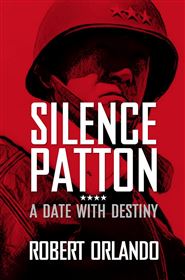
Silence Patton
Self (archive footage)
Self (archive footage)

D-Day: Wings of Victory
Self
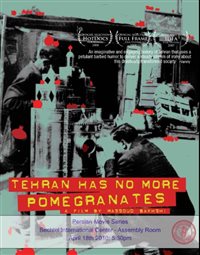
Tehran Has No More Pomegrenates!
Self (archive footage) (as Franklin Delano Roosevelt)
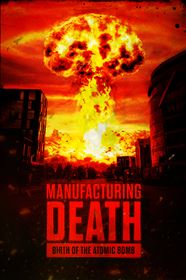
Manufacturing Death: Birth of the Atom Bomb
Self - U.S. President 1933 - 1945
The Real Red Tails
Self - 32nd President of the United States
Victories of the Third Reich
Self

Child Star
Self - 32nd President of the United States (archive footage)
The Real Red Tails
Self - 32nd President of the United States
The Bloody Hundredth
Self (archive footage)
To End All War: Oppenheimer & the Atomic Bomb
Self (archive footage)
Manufacturing Death: Birth of the Atom Bomb
Self - U.S. President 1933 - 1945
Dream Girl: The Making of Marilyn Monroe
Self (archive footage)
Uncle Tom II: An American Odyssey
Self (archive footage)

Pearl Harbor the World on Fire
Self - President of the United States (archive footage)
Filmmakers for the Prosecution
Self (archive footage)
D-Day: Wings of Victory
Self
The Soul of America
Self (archive footage)

Kiss the Ground
Self - 32nd President of the United States (archive footage)
Stalin and the Katyn Massacre
Self
East Lake Meadows: A Public Housing Story
Self

A Call to Spy
Self (archive footage)

Laissez-faire Vol. 2
Self (archive footage)
Where's My Roy Cohn?
Himself (archive footage)
Hollywood, das erträumte Leben der Lana Turner
Self (archive footage)
Churchill and the Movie Mogul
Self (archive footage)
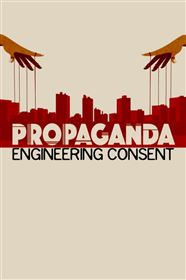
Propaganda: The Manufacture of Consent
Self - Politician (archive footage)
Silence Patton
Self (archive footage)
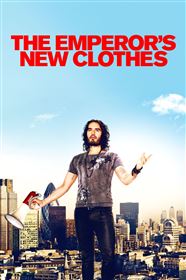
The Emperor's New Clothes
Former President, USA (archive footage)

Laissez-faire Vol. 1
Self (archive footage)
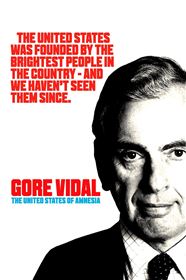
Gore Vidal: The United States of Amnesia
Himself (archive footage)
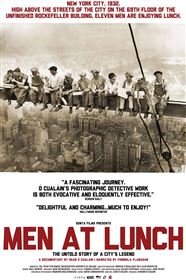
Men at Lunch
Himself (archive footage) (uncredited)
Black Wings
Self (archive footage)
Runaway Slave
Self - 32nd President of the United States (archive footage)
Norman Mailer: The American
Self (archive footage)
Secret Origin: The Story of DC Comics
Self (archive footage) (as Franklin Delano Roosevelt)
Capitalism: A Love Story
Self
1939: Hollywood's Greatest Year
Himself (archive footage) (as Franklin Delano Roosevelt)
Iran, une puissance dévoilée
Self
Live Free or Die Hard
Himself (archive footage) (uncredited)
Tehran Has No More Pomegrenates!
Self (archive footage) (as Franklin Delano Roosevelt)
WWE: The World's Greatest Wrestling Manager
Self
In Enemy Hands
Himself (archive footage) (uncredited)
The Fog of War
Himself (voice) (archive footage) (uncredited)
10,000 Black Men Named George
Self - 32nd President of the United States (archive footage)
World War II: The Lost Color Archives
Himself (archive footage) (as Franklin Delano Roosevelt)
Cradle Will Rock
Self (archive footage) (uncredited)
Contact
Himself - Voice Through Space (archive sound) (uncredited)
The Last Days of World War II (History Channel)
Himself (archive footage) (uncredited)
The Century of Warfare
Himself (unknown episodes)
December
Self (voice) (archive sound) (uncredited)
Self (archive footage)
The Complete Citizen Kane
Self (archive footage)
The Return of Captain Invincible
Himself (archive footage) (uncredited)
Time After Time
Himself - Giving 1933 Inaugural Speech (archive sound) (uncredited)
All This and World War II
Self (archive footage) (as Franklin Delano Roosevelt)
The New Original Wonder Woman
Self
Brother, Can You Spare a Dime?
Self (archive footage) (as Franklin Delano Roosevelt)
Thieves Like Us
Self - Speech (archive sound) (uncredited)
I Due Kennedy
Self (archive footage) (as Franklin Delano Roosevelt)
Cast a Giant Shadow
Self (archive footage) (uncredited)
The Eleanor Roosevelt Story
Self (archive footage)
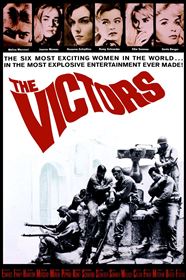
The Victors
Himself (archive footage) (uncredited)
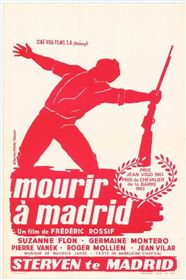
Mourir à Madrid
Self
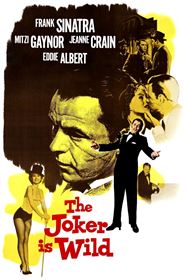
The Joker Is Wild
President Franklin D. Roosevelt (archive footage) (uncredited)
Okay for Sound
Himself (archive footage) (uncredited)
The Stilwell Road
Himself - at Quebec with Churchill (archive footage) (as Franklin Delano Roosevelt)
The True Glory
Self (archive footage)
To the Shores of Iwo Jima
Himself - Inevitable Triumph Speech (archive sound) (as Franklin Delano Roosevelt)
Por el Valle de las Sombras
Self (archive sound) (uncredited)
Tunisian Victory
Himself (archive footage) (as Franklin Delano Roosevelt)
Know Your Ally: Britain
Self (archive footage) (as Franklin Delano Roosevelt)
Attack in the Pacific
Self - Day of Infamy Speech (archive footage) (as Franklin Delano Roosevelt)
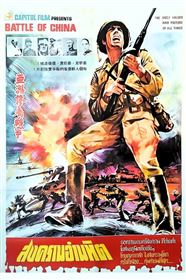
The Battle of China
Himself (archive footage) (as Franklin Delano Roosevelt)
Beyond the Line of Duty
Self
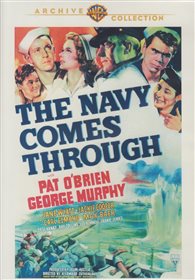
The Navy Comes Through
Self (voice) (archive footage) (uncredited)
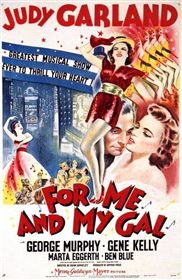
For Me and My Gal
Self - With Pershing in 1917 (archive footage) (uncredited)
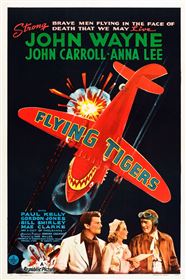
Flying Tigers
Himself (voice) (uncredited) (archive footage)
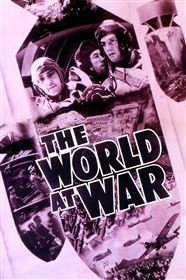
The World at War
Self (archive footage)
Main Street on the March!
Self
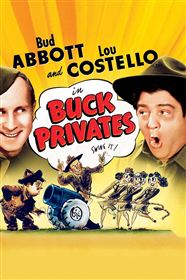
Buck Privates
Himself (uncredited) (archive footage)
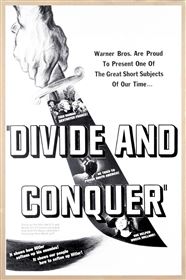
Divide And Conquer / The Battle Of Britain: Why We Fight
Himself - Dagger Speech (archive footage) (uncredited)


